What in the World?

isis-ferguson


Who do you trust?  Who do you believe anymore?

Ebola has come to the United States of America. Our President, the leader of the free world said it would not. He was wrong. Maybe the open border policy is not a good one.

The Center for Disease Control says we should not panic and this is an isolated case. This new plague can be easily contained and there is no issue. Nothing to see here.  Purchase your Starbucks and watch your Netflix.  Just remember to wash your hands.  Maybe this disease is weapon-ized and we should be wondering what religion Patient Zero subscribes.

Okay, let’s calm down for a moment. 

My point — A track record of double speak, political correctness, and failed leadership breeds distrust and hostility towards authority.

As a leader of a small team, project or a free republic, our words have consequences. Our credibility can shape the morale and effectiveness of our team or the direction of a nation.

It started with- “You like your healthcare…you can keep it.” To “Read my lips…No new taxes.” Don’t forget — “I did not have sexual relations with that woman, Miss Lewinsky.”

What we are witnessing today in our country and communities is failed leadership.  From the top down in every aspect of execution…this crosses political and ideological lines.

I will never be on television managing a crisis but as a leader in my home, my church, my job, and my marriage I can subscribe to the following:

Be slow to speak and quick to listen.

Let your ‘yes’ be ‘yes’ and your ‘no’ be ‘no’.

Say what you mean and mean what you say.

Be truthful.

Just my two cents.  Excuse me.  I’m going to wash my hands.

Communicating as a Leader


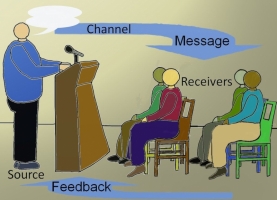
transactional-comm-modelI recently spent 2 days in meetings with the North American members of my global team.  There were a lot of presentations.  A lot!  One word that came up over and over again was the word: “Communication”. I have heard many presentations in my career on the importance of communication. But, one guy boiled it down very succinctly.  And I loved the sense of urgency that it conveys.

He said it this way:

  1. What do I know?
  2. Who needs to know it?
  3. Have I told them yet?

I thought that was pretty good. Effective communication is one of the key skills that a leader must possess if they are to be successful. So, let’s break it down.

What do I know? – As a leader, I have access to and am privy to things that the rest of the folks on my team do not have access to and are not privy to in their current roles. So, I must recognize that I have a duty to spread that knowledge when and where it is appropriate to do so.

Who needs to know it? – Not everyone needs to know what I know. And in many cases it would be detrimental to the team for them to know what I know. Personnel and salary information are the easy examples. But it goes well beyond those examples. The ones that need to know specific information are those who are somehow engaged in a project and need the information that you possess.

Have I told them yet? – This indicates that there is time sensitivity or an imperative to share the information when they are the right person to receive the information. So, do not delay. Share the information as quickly as you can because they may be waiting on that information in order to determine how best to proceed.

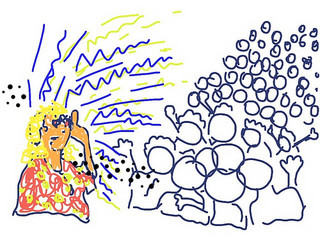
One to many communicationBut, I think that there may be a little more to the process than those three questions. In fact, I would add three more.

Click here to read the rest of the article »

Leadership is… Teaching


Teaching - 1Leadership is teaching.

We must tell others what we are attempting, why we are doing it, how we plan on getting there and how to avoid pitfalls along the way. As leaders we can never assume that the people we are leading know what we are thinking or reaching for.

As we live out our personal mission we must constantly be attentive to leading others through teaching. We must explain why we do what we do, and we must invite others to join us. We cannot be timid in our recruiting or our teaching. Our words must be clear and purposeful.

Teaching - 2Our teaching must be about more than just vision, but also about the process. But let me be clear here: the teaching of leadership doesn’t only go one way. In many ways this facet of leadership could be titled “learning” because not only will our team be learning but we will be as well. Sometimes we are the teacher, sometimes one of our team is doing the teaching and of course many times it is the circumstances and failures along the way that teach us the most.

As leaders we must teach and we must learn, because if we do not then we ourselves, not to mention our team and our organization, will stagnate and become irrelevant and useless.

Photo credit: ben110 / Foter / CC BY-NC-ND
Photo credit: Gates Foundation / Foter / CC BY-NC-ND
Photo credit: Forty Two. / Foter / CC BY-NC

Talkative Leadership


Talkative Leadership - 1This past Sunday I stood up in front of a large group of people and talked.  And talked, and talked, and talked.  I ended up talking for 10 minutes.  I was trying to encourage people, and to lead them.  I was trying to be the leader I thought I was hired to be.  I really did.

The problem is that I wasn’t hired to be “that” type of leader.  I wasn’t hired to talk a lot.  I was hired to lead, but in a completely different manner.

So what’s the problem you ask?  If I was trying to do something positive then all is well, right?  Well yes and no actually.  Trying to do something positive is good, but when it is done at the expense of something better it’s less good.  By taking so much time talking, I stole time from the person who was hired to lead by talking, and therefore robbed the audience of more leadership from him.

Talkative Leadership - 2Which leads me to my point.  

Sometimes good leadership means

Click here to read the rest of the article »

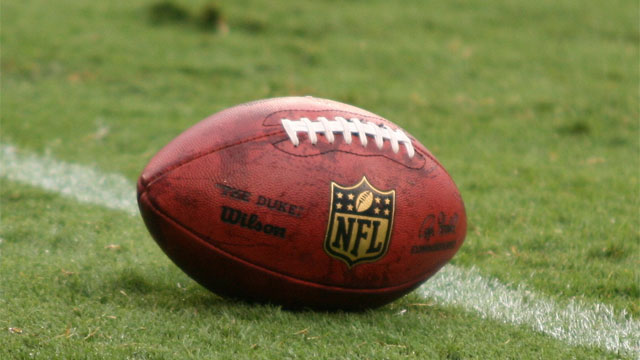
The NFL: Major Leadership Fail

 american_football_9002

I was on Facebook the other day and I saw this post-“Wanted: an obedience school that trains puppies AND sweet little 2 year old girls.” Of course, I couldn’t resist and I threw my comment into the fray: ” I hear the NFL may have some Subject Matter Experts. They can even help with Spousal issues as well.”

Let’s face it the NFL is having a bad public relations year. They are a very easy target to bash. I believe this was a long time coming. Now…I’m not going to argue that old tired argument about men getting paid millions and millions of dollars to play a child’s game. You have never turned down a paycheck. Get over it. That’s capitalism. And if someone is willing to pay what you think you are worth. Amen. If you don’t think Sports is profitable-Johnny Manziel built the new Kyle Field. But I digress.

I believe the NFL failed when it stopped doing what it does best. Football.

Howard Cosell was fired for describing the amazing elusiveness of a black player similar to a little monkey getting loose. It started. The NFL began worrying about social issues and racial sensitivities. Now everyone was on edge. Ironically, the black player played on the Washington REDSKINS. (In reality, ABC fired Cosell not the NFL.)

The NFL eliminated celebrations after touchdowns. Unfortunately, one of my football heroes lead the crusade-Tom Landry. In other words, the NFL began punishing success. We didn’t want to rub it in. We don’t want to offend the players, coaches, and fans who we just scored on. Thus was born participation medals.

Vince Lombardi stated-“When you get to the end zone, act like you’ve been there before.” That’s why I loved Barry Sanders. He would score, lay the ball down, and sprint out of the end zone. The NFL took away the players’ discretion on how to celebrate a score. Remember running back Ickey Woods celebrating on the sidelines after a touchdown because he was banned from the end zone? At the end of the day, it didn’t matter. Now players can’t dunk a football over the goal post. It might offend basketball players.

Hablas Espanol? Then the NFL tried to reach our friends who love Futbol by patronizing them with Spanish translations painted on the football field. Suddenly, the National Football League became ambassadors to assist with our illegal immigration issue. Nu’ff said. I’m just shaking my head.

Breast Cancer Awareness. The Pink on the field is enough. I have cancer survivors in my family. I am not being callous. There may be a Domestic Violence Awareness Month and Purple will dominate the football field. (Isn’t purple made up of black and blue?)  Ridiculous isn’t it.  Where does it stop? All this takes the focus off of what NFL does best-Football.

Now, a lot of good may have come from all this. But to me it is a perfect example of failed leadership and losing sight of what you do best.

What will save the NFL? Fantasy Football. Men and women tired of the politics of the teams, commercialism, and stupid rules have now turned to building their own teams and just reading Stat sheets on Sunday evening instead of actually watching the game.

Sadly, I can remember wanting to watch every down of every game.

Develop Your Own Financial Game Plan – The Beginning, Part 2

Wad of moneyWhen we last visited I outlined some of the basic principles that need attention to more effectively chart our financial course in life. The start of any journey requires proper preparation, and that’s what ‘the beginning’ is all about. Today we’ll revisit briefly those concepts, put the pieces together and look at another exercise for the parents among us.

The four elements of financial living we’ve looked at are:

  • What we have already
  • What we owe
  • What we earn
  • What we spend

Knowing what we have and what we owe allows us to create a Balance Sheet. Our assets (what we have already) minus our liabilities (what we owe) show us our Net Worth. Understanding what we earn and what we spend allows us to create an Income Statement. Our income (what we earn) minus our expenses and other debt payments (what we spend) show us our Net Income. Each is a point in time snapshot of the key elements of our financial health. Ideally, over time our Net Worth grows and our Income Statement never goes negative, or ‘into the red’.

While both an accurate Balance Sheet and Income Statement are elementary tools, it’s surprising how few can produce either when asked. For those who handle their finances manually, the task of creating an Income Statement should be undertaken once a month. A Balance Sheet should be updated at least quarterly. Both should be maintained with your other financial records. Since family finances are a ‘team sport’ it is important for both spouses to review these documents, and it’s even better if both participate in creating them. Also, if there are children, these are worth sharing in an age appropriate way. Our children need to understand how money works. It’s vital to their better future.

Quicken for MacAs an alternative for doing this work manually, I’m a big believer in Quicken or other similar software programs that are available at a nominal cost. My family tracks EVERYTHING in Quicken, even logging cash expenditures and others at a very detailed level. At first, it was tedious and seemed overly time consuming, but today it’s become something we look forward to doing as we chart our progress forward. And it’s even paid us back, by allowing us to fully maximize our deductions at tax time and in a host of other ways.

Next, let’s look at the concept of budgeting.

Click here to read the rest of the article »

Adaptive Leadership


Adaptive Leadership - 1So many of the world’s problems, and the issues that organizations, businesses, and people face every day can seem intractable and unsolvable. Leadership consultants Ronald Heifetz, Alexander Grashow and Marty Linsky discussed a new way to lead the charge to change in their book in 2009 entitled, “Adaptive Leadership”.

Adaptive Leadership calls for moving beyond outdated approaches and embracing new skills and attitudes to guide your organization in the 21st century. Adaptive leadership combines established ways of leading with new skills and new perspectives for dealing with unprecedented challenges.

But, if it were easy, everyone would be adaptive leaders and everyone would be successful.  Before you begin the process of bringing lasting change to an organization you must

Click here to read the rest of the article »

Listening for the Future


Listening Leaders - 1Great leaders are always “listening for the future” all the while staying grounded in the here and the now.

That sounds impressive and insightful.  But what does it mean?  Simply, it means that our society is evolving into a noisy, chaotic world; characterized by “volatility, uncertainty, complexity and ambiguity” (This is what “Futurist” Bob Johansen refers to as “VUCA”).

Elements of the VUCA paradigm have existed throughout history, but never to the extent evident in the early 21st century.  Leaders who make decisions without regard to VUCA realities tend to exhibit various “dysfunctional and dangerous” attitudes and reactions, including fear, disdain, procrastination, frustration, anger and denial.  And I am not exactly sure where the anger is strongest.  Is it on the side of those who loath their leaders?  Or is it on the side of the leaders who loath the burden of leadership?

Nevertheless, there are enduring leadership principles that will hold you in good stead during these VUCA times.  Consider the following:

  • To be on time is to be late. – Get there early.  Get there before your team arrives and be ready to greet them as they arrive for the day or for the meeting.
  • Always start on time.  – Don’t punish those who are on time for the sins of those who are late.  And don’t go back over what you have already covered for those who do arrive late.
  • Mental gymnastics.  – Build leadership skills through leadership thoughts.  Read and study other great leaders.
  • Listening Leaders - 2Actively listen.  – But carefully filter what you hear.  Make sure that in the midst of your listening that you are not swayed by an emotional message that takes you away from your core values.
  • Be ready for action.  – We are living in a fast paced world and in the face of uncertainty, preparedness is a great benefit.
  • Practice “urgent patience”. – Know when to press forward and when to ease up on your team.
  • Be a storyteller. – Use compelling stories to inspire hope in your team.
  • Observe synchronicity. – Nothing occurs in a vacuum.  So explain connections and patterns to help others find the reason for your actions.
  • Stay positive.  – It is easy to succumb to the negativity that surrounds us.  We get a steady diet of it on the news and from the media.  Do not dwell on this.  [I could speak at length here about the importance of being in some type of daily devotional reading, but I will save that for another time and place.]
  • Don’t spread yourself too thin.  – You cannot directly lead a multitude.  So, find a small group of leaders to develop and pour yourself into them and make them into great leaders.  Don’t make them clones.  Make them leaders.

Click here to read the rest of the article »

Leadership is… Modeling


Modeling - 1Leadership is leading, but perhaps first it is living.

We must live what we know is right and pursue the goals and steps we know are important to live out our purpose. In other words as leaders we must let our lives model our convictions. As those who have been given charge of a group of people we must model what we are advocating and live out loud the lifestyle and practices that we are hoping they will one day emulate. In order to have credibility we must be authentic and live what we teach. Not only this but because people learn in so many different ways a multi-sensory approach to training and equipping is a must.

Furthermore,

Click here to read the rest of the article »

Learn From Your Life

A few years back I wrote about how nothing in our life is wasted.  This post further explores some simple ways that you can learn from your life and use the lessons you can learn to help those who are coming up behind us.

I was sitting at a friends house the other night and began chatting with his 14  year-old son about girls, money, business, growing up, faith, and making good choices. I’m sure it was a fun conversation for a teenager on a Friday night, but he was kind and obliged my candor and strong opinions.

Click here to read the rest of the article »