Wit & Wisdom from Midland County, TX


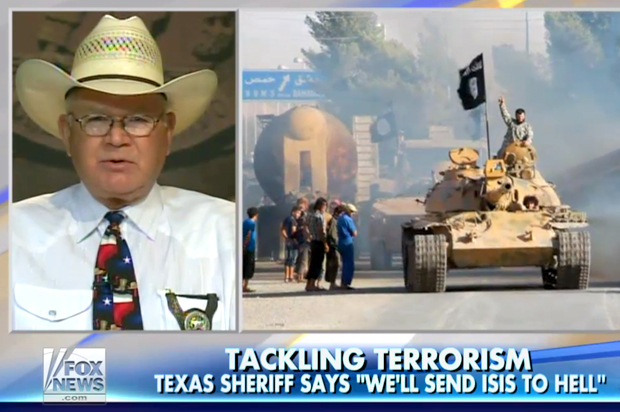
Gary Painter on Fox News

I love living in Texas.  I usually tell people that I was born in way extreme far east Texas. [better known as Alexandria, Louisiana].  And you get wit & wisdom out of folks in Texas that you don’t seem to find in or around the Capital Beltway.  I know, because I lived in that area for quite a while also.

I don’t often tackle politics in my writing.  And I really am not trying to tackle politics right now. Instead I think there is a leadership lesson to be learned here.  Consider if you will for just a moment Sheriff Gary Painter from Midland County in Texas.  Recently he was interviewed on Fox News about the ISIS threat to the United States.  Consistent with what he has been saying for at least 8 years he made the following statement.  I am providing it below with advance apologies for some of his language as I never want to offend our readers. But here is his quote:

“If they show their ugly head in our area, we’ll send them to hell.
I think the United States needs to get busy and they need to bomb them.
They need to take them out. I would like for them to hit them so hard and so often that every time they hear a propeller on a plane or a jet aircraft engine that they urinate down both legs.”

Contrast that with our President who calls them the “JV squad” and who doesn’t have a plan to deal with them.  And ask yourself for a moment,

Click here to read the rest of the article »

The Poser in Me


The Poser In Me - 1For the last year or so I have been facilitating a small study group with a hunger to understand not only leadership values but what has God called us to do. Out of that study there have been several revelations to the developmental phases of a young persons life. We are very blessed to have the opportunity to nurture our young into meaningful productive God fearing people.

But where do we fail them?

I believe one of the early stages of when we let them down is when we fail to “affirm” them. Now, many of you reading this will  not associate with that statement. However, when we look at the breakup of many families today one of the most telling statements heard is of how the kids are NOT valued. Do we allow boys to be boys, or girls to be girls? Certainly NOT! Neither gender can compete “honestly” in any competition. We  teach them from an early age that “misrepresenting the truth” is an OK (no winners, no losers) thing to do. The reality is there are winners and losers. Another reality is…some of those winners have turned into big losers while some of the losers have turned into some of the biggest and brightest stars we’ve seen.

Consider;  Susan Boyle, a Scottish singer who  appeared on Britain’s Got Talent in 2009. She finished second, but her amazing talent  captured the world’s attention.  Her 1999 rendition of “Cry Me a River”was watched over 100 million times!  Boyle even made 5 Million Pounds with the release of I Dreamed a Dream. How’s that for a Successful Loser? 

Boyle was Boyle and under pressure refused to change. She refused to be a poser!

What is a poser?

Click here to read the rest of the article »

Train up a child…

I’m the father of three little kids, and we’re just starting school for them. I’ve wondered a bunch lately about the things that they will learn this year, and where they will be successful, where they will struggle, and how I can lead my family through both ends of that spectrum. I’ve wondered how well they will be reading and writing, what sort of social experiences they will have… you get the idea if you are a parent.

I’ve also been thinking lately about the things that my children need to learn: an understanding of football, baiting a fish hook, how (and more importantly, when) to throw a punch, how to safely handle a pocket knife (for my oldest, at least), for a few examples.

Click here to read the rest of the article »

Four Characteristics of Good Crisis Leaders

Four Characteristics of Crisis Leaders - 1

Thirteen years ago today, on September 11, 2001, we witnessed both the destructive power of evil leadership and the resilient power of heroic leadership.   We saw heroic leadership in the first responders and private citizens who ran toward the burning towers, cornfield and the Pentagon.  But among those heroes, one figure stands tall as an example of effective leadership during the crisis as it unfolded and in the days following.  That person is former New York City Mayor, Rudy Giuliani.   Regardless of your current political leanings, his confident leadership during the 9/11 tragedies is something that you and I and leaders from all walks of life can learn from.

Rudy GiulianiGiuliani writes the following in his book, Leadership, published in 2002, “It is in times of crisis that good leaders emerge.”

Giuliani goes on to write in his book that during these times of crisis, good leaders must do certain things to be effective during those trying times.   He writes that good leaders in crisis situations must be highly visible, they must be composed, they must be vocal, and they must be resilient.

Good Leaders are Visible in a Crisis — Giuliani writes, “I made it my policy to see every crisis so I could evaluate it firsthand.”

During a crisis, leaders must be out front rather than running and hiding. They must go to the disaster and stand front and center, to assess the situation as well as show their concern, while also demonstrating confidence that the group will persevere.  Rather than hide from the chaos and confusion, be sure to step in to sort things out and find a solution.

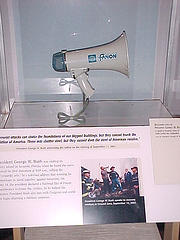
Four Characteristics of Crisis Leaders - 3Again, political preferences aside, the importance of being visible during a crisis can also be learned from George W. Bush’s presidency. Like Giuliani, Americans rallied around President Bush when he went to Ground Zero and grabbed a bullhorn amid the rubble to reassure the nation.  Contrast that with President Bush’s lack of a timely response to Hurricane Katrina. Bush was noticeably absent during the first days of the crisis and his poll numbers took a big hit.

What is the leadership lesson? Step up during a crisis to survey the scene and be there for your people.

Click here to read the rest of the article »

Signs That A Leader Is Succeeding

Signs That A Leader is Succeeding - 1I recently wrote an article called, “Signs That A Leader Is Failing”.  And I did so with a fair amount of trepidation.  When you consult with other leaders you always wonder what one of them will think when they read one of your articles.  You wonder if they think it is about them.

(Why is there suddenly a Carly Simon song playing in my head)?

Signs A Leader Is Succeeding - 2Well, today, I hope that all of the leaders that I have worked with over the years think this article is about them.

I have written over 160 articles describing, in some way or another, what it takes to be a superior leader in the home, at church, on the job, and in society.  Some researchers and authors claim a superior leader possesses certain traits or abilities innately; others say it is all personality, style and charisma. Still others maintain it is the behaviors or actions that I take — if I do this, then my followers will do thus — that are crucial.  Regardless of the how and why, these are some signs that your followers are following you and that you are succeeding as leader:

The team caught your Vision —  Successful leaders have followers that have a clear understanding of your vision and what it means to them as an individual contributor or follower.  They see it and they own it.  There is no ambiguity.  If you ask them on an elevator to describe the vision of the organization, they can express it with clarity and passion.

The team understands the Mission —  Successful leaders have communicated the mission and the team “gets it”.  They know why the organization exists in the first place and they have a sense of the historical context of the organization.  They can also answer the mission question on an elevator just as effortlessly as they can answer the vision question.

Signs That A Leader Is Succeeding - 4The team has a Goal  —  Successful leaders have followers who understand the goals set for them.  They were probably participants in setting the organizational goals and their individual goals.  They are both excited and challenged by the goals and they are looking forward to stretching to achieve them.

The team is Confident —  Successful leaders have followers who are confident in their leaders and in themselves.  They have been taken through a process

Click here to read the rest of the article »

Five Things You Can Do To Prepare The Young To Lead


5 Things to Prepare Young Leaders - 2There is much to be learned from those who have served our Country by serving in the military. This is especially true if you look at some of the “specialized” organizations within the military.  I am blessed to have some very dear friends who have served.  One or two have served in some of our military’s most elite units.  Consider the following as it relates to leadership and youth.

“We expect to lead and be led. In the absence of orders I will take charge, lead my teammates, and accomplish the mission. I lead by example in all situations.” — Navy SEAL Creed

Navy SEAL Teams are a relatively flat organization. Everyone goes through the same grueling training, and everyone is trained to lead regardless of age or rank. In the civilian world, emergent leadership is about team members stepping up and taking the initiative to accept more responsibility and to perform work outside of their general roles when called upon. If we, as leaders, encourage and promote this type of drive, our young team members will be ready to rise within the organization, and our organization will be better off for it.

5 Things to Prepare Young Leaders - 1Here are five ways that we can prepare our young people for leadership.  But remember they are, in fact, young:

Give them a platform. Don’t hide your young leaders. Show them to the world. Let them be a feature of your organization.  Encourage them to contribute to the organization’s blog if you have one.  Take them along with you to trade shows and give them an opportunity to represent you in the booth.  And offer them opportunities to collaborate on ways to improve the organization’s systems and offerings.

Manage them, not their output. Get the right people in the right jobs, give them a goal, but don’t micromanage their efforts. It has been my experience that when someone comes to you and says, “I am not trying to micromange, but  . . . “, they are usually micromanaging!  Set goals and boundaries and then back off. Allow them to be innovative and develop systems, processes, and methodologies that will accomplish the goal you set for them and that get the job done. They may and probably will do it differently than you would have done it.  And that is OK.  Doing this will not only result in a more confident team and better retention, but will give your team members a sense of ownership that they wouldn’t get by simply following your orders.

Let them fail.  This one is hard. 

Click here to read the rest of the article »

Fantasy Football and Family


Fantasy Football - 1

And with the first pick of the 2014 Fantasy Football draft I pick . . .

I’m a big fantasy football player.   BIG.  I research players in the offseason.  I read and listen to the fantasy football prognosticators.  I prepare meticulously for the draft.  I participate in mock drafts for goodness sakes.  By draft day I know:  whom I want, in what round I want them, and what players I will avoid completely.  If I’m honest, I might be a bit obsessive.  Okay, I am a bit obsessive.  Okay, okay, I admit it, I’m really obsessive!

So, with the first pick of the 2014 Fantasy Football draft I pick . . .  my family.

That’s right, not Adrian Peterson or Peyton Manning, but my family.  I know without the shadow of a doubt that my family’s football stats will pale in comparison to those two fantasy studs, but I also know it is absolutely the right pick.  I realized that my obsession with fantasy football isn’t healthy.  Does that mean I’m quitting fantasy football?  Heck no.  Having hobbies you enjoy is an important element of a satisfying life.  It just means I am going to reprioritize the role it plays in my life.

Fantasy Football DraftI think the exercise of taking an honest look at our priorities is a very healthy one.  For you it might not be fantasy football, but I guarantee you that most of you have something in your life that has gained a higher degree of priority than it deserves.   Here’s a list of potential candidates:  your job, your friends, Facebook, your blog, Pinterest, church, food, golf, adult beverages, and on and on and on……  Whatever it is, find it, slap it in the face, and tell it to move on down the list.  I promise you it is less important than your family.

So you might be thinking (at least I hope you are thinking at least something), “Lance, shouldn’t your number one pick be God?”  To which I say, “No”.  Because I operate under the assumption that God is an all-consuming reality.  Without God there is no family, no football (and hence no fantasy football), no job, nothing.  God is the foundation of my priorities.  He isn’t on the list, because without Him the list is meaningless.  In fact, it doesn’t even exist.  God is above the list.

Fantasy Football - 3Whether or not you share that belief, I encourage you to make a list of your priorities.  Now.  Not next week, or next month.  Because we aren’t promised anything but right now.  Be brutally honest when you rank them.  Here are a couple of things to consider when you rank their importance:  

Click here to read the rest of the article »
Signs That A Leader Is Failing

Leadership Failure - 1I was told by a manager one time, “If you aren’t failing, you aren’t trying.” And I am sure that there are many situations in which that statement is true. But, I am not dealing with effort and intentions alone today. Instead, I am dealing with results.  To some this may seem harsh.  Our society often expresses success in terms of trying really, really, really hard.  But for today, let’s look at failure from a results-oriented perspective.

There are certainly tell-tale signs when a leader is failing. And that is true even when the leader himself does not see it. Certainly those around him don’t always it either. And if those that do, don’t always know hot to address it.  But many times, those with discernment will see it.

Consider some of these signs of leadership failure within an organization:

  • A leader is failing when there is a refusal to accept advice or help from other leaders within the organization who are more experienced. Sometimes we think that we must do it all ourselves and we must “gut it out.” Although advice is easy to find. Good and sound advice is a precious commodity. As a leader you must seek it out and give it very careful consideration.
  • Al leader is failing when they lack the support of those around them. Failure is near when you have lost the support of those closest to you and who have real insight into the situation.
  • A leader is failing when new people searching for a an organization with goood leadership continue to pass you by. Among many things, leadership is defined by followship. And when there are folks in need of leadership and yet they choose a different organization, this is a sign of leadership failure and that failure is obvious to those outside of the organization.
  • A leader is failing when they bring embarassment or shame to the organization. It seems that the concept of shame is a distant and bygone concept. But everyone still understands embarassment on a personal level. So, if your organization is the brunt of jokes or is ridiculed publicly, there is leadership failure.
  • A leader is failing when there are financial problems. This one is a little tricky if your organization is a church or non-profit and it depends upon charity or offerings for funding. Fundraising is an unavoidable function of leadership in this setting. And financial problems are most often indicative of the lack of “buy in” by those in the organization. As leaders we must be able to communicate and get buy in.
  • A leader is failing when you continually miss opportunitues. There is a big difference between “seeing” and opportunity and “seizing” it. And these lost opportunities are hard to quantify. But here is where great leaders surround themselves with great teams where there is likely to be someone with the ability to spot opportunities and initiate a strategy to take advantage of that opportunity.
  • A leader is failing when there is desperation. Great leaders do not let the situation degenerate to the point that deperation kicks in.

Click here to read the rest of the article »

Bearded Leadership

Bearded Leadership - 1What does having a beard have to do with Leadership? Well, maybe nothing, but maybe everything. If you look back through history, have all of our great leaders been older? Have they all had beards? I think one of our best leaders in history had a pretty epic beard, Abraham Lincoln.

What is my point? My point is that it doesn’t really take age or facial hair to be a leader, although I think it should. My point is, however, that it takes maturity to both have facial hair and to be a leader.

“No one was ever born with a beard”

Anonymous


No one was ever born a leader. I think maturity, like leadership, is one of those things that is not inherent in life. You are not guaranteed or promised maturity, or leadership. Maturity is also different in all of us. It is found in different places, and different times and we discover our maturity for different reasons. Personally, it took a war, for me to discover mine. I will admit I have times of immaturity, and I think that is not only okay, but is healthy. I don’t think we should take ourselves too seriously.

Bearded Leadership - 2I think it is safe to say, while it doesn’t take a beard to be a leader is does take maturity. There are immature people in leadership positions, but their leadership is either poor or short lived. Remember maturity is several things. It is physical. It is mental. It is emotional and it is spiritual. All of these things contribute to the style and the effectiveness of your leadership.

A leader has a mission. A leader has a plan. A leader is going somewhere. There’s a reason for doing what you’re doing, and when anybody thinks about you, they think about a person with a plan.

Click here to read the rest of the article »

Manday: Two Men in the Lion’s Pit-Part Two

benaiah

The pursuit of Biblical Manhood can be very elusive.  It can be like trying to excel at all the gifts of the Spirit.  Pile on top of that leadership imploring that you need accountability and mentoring just to survive until next Sunday.  Every proclivity is treated as an addiction and a week of spiritual rehab and repentance is needed, again, just to survive until next Sunday.  As being a Heralder of Men’s Accountability, I have had to take a deep breathe and try to simplify this whole process.

The Bible paints an amazing picture of accountability with the example of two men on a roof.  Recall King David alone on a roof when he should have been leading troops to war.  Instead, he lusted after a woman, slept with her, murdered her husband, and then tried to cover it up.  Another man lying on a mat, paralyzed, is carried onto a roof by four friends and lowered through the same roof to be healed by Jesus.  Amazing opposites.  Imagine how King David’s tale would have been different if he had four men advising him to be at war instead alone drooling over bathing women.  An amazing portrait of accountability.

I scoured the Bible to locate a portrayal similar to the two men on a roof that portrayed an example of Biblical manhood.  Over the years, I have noticed two camps in the church-a ‘gentle’ man and a ‘rough’ man.  I’ve heard the Jacob and Esau example used and it did not sit well with me because God loathed Esau.  Still I believe there are two kinds of men. Those that run toward danger and those that stay back and fortify the front. Both are needed and both fill our pews of our churches today. One is not better than the other.  God’s Word gives two examples of two different men that God chose to write about.  Both warriors entered a lion’s pit and lived to tell about it.

Many have heard about Daniel in the Lion’s Den.  Daniel was a slave so favored by King Darius he was chosen to govern the government. Details mattered to him. He was submissive to the authority he was under but he obeyed God’s law.  Daniel never lifted a spear or took a human life. But…Daniel was a prayer warrior on his knees.  He abided in God’s laws, not eating the Babylonian food, and choosing to pray despite a law forbidding him.  Daniel was thrown in to lion’s den as punishment for breaking that law but God protected him.  God shut the lions mouth shut and Daniel survived a night in a lion’s pit.

The other example is Benaiah.  In scripture, we read of a valiant warrior turning the tables and chasing a lion into a pit, and, then killing the large feline.  This man is different from Daniel but needed.  This man runs towards gunfire.  He is a warrior in a different manner.  He is a man of action with his physical nature.  He is a man that seizes opportunity. His hands are calloused and a hard days work for him is the soreness in his muscles.  This man is needed as a warrior.  And our pews are filled with this type of man.  He is a risk taker.  Ironically, he was King David’s head of Security.  Do you not think he knew David was on a roof by himself.  Hmmmm.

So which man are you?  Are you Benaiah or Daniel?

I think all of us have a traits of each.  As I posted last week-I am no gentleman.  You will tolerate a man like me because you sleep better at night knowing I hunt the lions you believe don’t exist.  My life resonates with Benaiah’s.  I hunt those lions.  But when I find myself surrounded or thrown into a lion pit will I have lived my life like Daniel to be spared the tearing of my spirit?

Simplified?  Maybe.  I just prefer these two men as examples of Biblical Manhood instead of Jacob and Esau.