The Rt. Hon. Sir Leander Starr Jameson

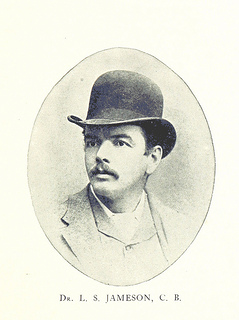
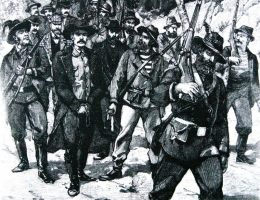
LS Jameson - 1My guess is that many of you may have no idea who Leander Starr Jameson is or was.  And, to be honest, I did not know much about him until recently.  He was born on the 9th of February in 1853 and he died on the 26th of November in 1917.  He was a British colonial politician and was best known for his involvement in what became known as the Jameson Raid. 

The Jameson Raid was a botched raid on the Transvaal Republic carried out by Leander Starr Jameson and his Company mercenaries and policemen over the New Year weekend of 1895–96. It was intended to trigger an uprising by the primarily British expatriate workers in what is present day South Africa, but it failed to do so. These expat workers were called the Johannesburg conspirators. They were expected to recruit an army and prepare for an insurrection. The raid was failed and no uprising took place.

All of this is backstory and meant to impress you with my ability to Google things faster than a speeding bullet.  It is also to set the background for a man who, despite a resounding failure, seems to have inspired a degree of devotion from his contemporaries. Elizabeth Longford writes of him, “Whatever one felt about him or his projects when he was not there, one could not help falling for the man in his presence”. 
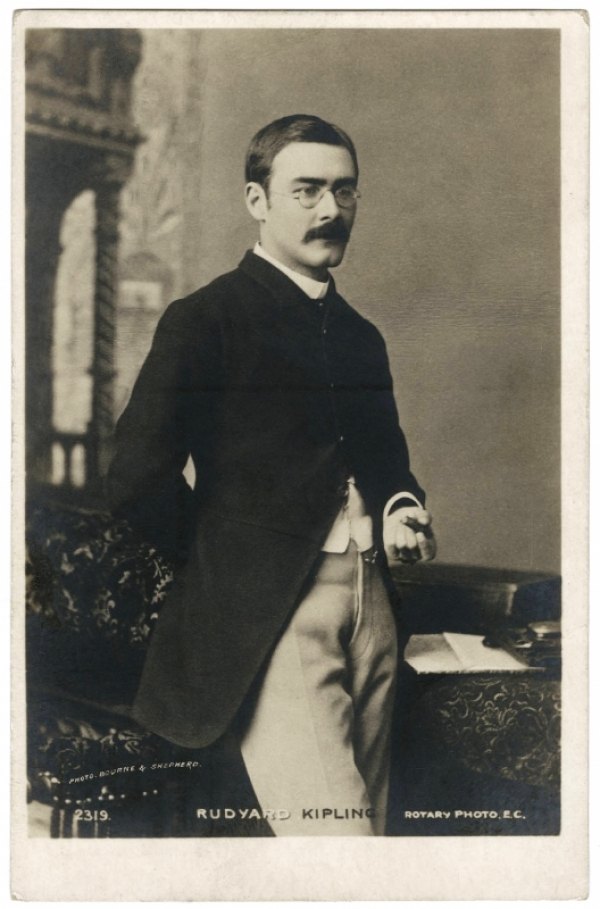
LS Jameson - 3Longford also notes that Rudyard Kipling wrote the poem “If—“ with Leander Starr Jameson in mind as an inspiration for the characteristics by which he recommended young people to live.  This is notably so for Kipling’s son, to whom the poem is addressed in the last lines.  Direct evidence that the poem “If—“ was written about Jameson is available also in Rudyard Kipling’s autobiography in which Kipling writes that “If—“ was “drawn from Jameson’s character.”  Kipling indicates that it was written in celebration of Leander Starr Jameson’s personal qualities at overcoming the difficulties of the Raid, for which he largely took the blame, although Joseph Chamberlain, British Colonial Secretary of the day, was, according to some historians, implicated in the events of the raid.
LS Jameson - 2So, what characteristics did Kipling have in mind? 

Click here to read the rest of the article »

Leadership Lessons from a Godly Mother

883790I was reminded in church this morning of the importance of a Godly mother and the development of leaders.  Today was special not only because it is Mother’s Day and I had the chance to be in church this morning with not only my mother, but my mother-in-law as well.  I was also able to be there with my daughter-in-law and our son as they dedicated their son.  It was a special day.  But it also was an opportunity to consider the importance of mothers and to consider the impact of a mother’s dedication to raising a leader.

We worshipped in a typical Texas small town First Baptist Church.  The people were warm and friendly and it was refreshing to my soul.  The pastor spoke simply but eloquently and caused me to think again about the important leadership role that a mother plays in the lives of her children.  And I have borrowed liberally from his message this morning in writing this piece.

Consider with me for a moment the Godly example of Hannah from the Old Testament book of First Samuel.  The first few chapters tell us the following things and they are an example of the impact a Godly mother can have on her child for now and for eternity.  Here is what I see from looking at these first few chapters in the book of First Samuel.

Hannah prayed desperately for God to give her the desire of her heart.  She prayed deeply and earnestly that she would have a child – a son.

Hannah prioritized the raising of her child.  She made sure that she taught him the things that would be important to him as an adult and that would prepare him for great things.

Hannah dedicated her child to God and to His service.  She saw herself as serving a greater purpose than just feeding and diapering.  She believed that she was a steward of the gift that God had given her.

Hannah was faithful to the responsibility to parent.  She was dedicated and she was steadfast in her sacred task.

12748So, what are the leadership implications of this story? 

Click here to read the rest of the article »

Leadership in Chaos

Leadership in Chaos - 1I had the privilege of escorting my wife on a trip over the last few days to New York City.  Now those of you that know me, I am sure cannot imagine why I would want to go to New York City.  Well I’ll tell you, because my wife has always wanted to go there.  So I return to work today to relax a little bit and think about the pure and utter chaos that is NYC.  It caused me to remember a “Leadership In Chaos” workshop I attended while I was in the military.  The man that spoke during the workshop was a Colonel and an Airborne Ranger, and today as I write this, he is a leadership consultant at the Military Academy at West Point.

Last Thursday morning at 0530AM I found myself in Times Square standing outside of the Good Morning America studio preparing to be part of the audience that you see outside their window if you have ever watched the morning show.  As the majority of this was pretty slow, I found myself wandering and looking around in Times Square at 6-ish AM.  What did I see? That’s right you guessed it – chaos.

So I got to thinking how a leader would be able to maintain discipline and focus with surroundings like this? Leadership in Chaos - 2I thought our military leaders could offer some ideas.  If there is anything that today’s military leaders are comfortable with it is in being…uncomfortable.  In places like Afghanistan (and Iraq before it), spans of control are so broad, geographic distances are so immense, and challenges so diverse that leaders cannot possibly be everywhere or know everything that is happening.  The fog of war is an almost constant companion to our military heroes.  “VUCA – Volatility, Uncertainty, Complexity, and Ambiguity – is the new normal.”

Much of what we thought about organizational management is grounded in the “Command & Control” world, a paradigm that just doesn’t fit in today’s VUCA scenario.  Places like Afghanistan are causing us to think differently about some aspects of leadership.  “Decision cycles are too compressed to fit within the top-down Military Decision Making Process (MDMP).”  Things that were accepted norms like, “No more than 5-7 direct reports” are not necessarily true, and can’t be any longer.  Even leadership teachings about things like planning, risk, or scope of responsibility are being re-thought in light of what we are learning downrange.

So, with leadership as we thought we knew it in evolution, how do leaders provide clarity of purpose and thought and drive appropriate actions? 

Click here to read the rest of the article »
Leadership Lessons from Finding Nemo

Entrance to WDWI am in Orlando, FL as I write this morning.  The kids are off at the playground and we are having a bit of a more calm day than the last few have been.  And I am looking for inspiration from our recent experiences.  And I found it at Disney’s Animal Kingdom in the live performance of Finding Nemo.

Just like in the animated movie, the little fish named Nemo gets caught by some divers and is taken to live in a dentist’s aquarium. To Nemo, being stuck in the tank is pretty trivial compared to not ever seeing his father again. (This theme is just about right for Fatherhood Friday, wouldn’t you say?)

Nemo 1But little does Nemo know that his father is the kind of father who will go to any length to try and find his son so that he can bring him home again.  Up to this point his father has been timid and afraid to let his son go out into the world and experience life.  Tragedy has touched their family and it has scarred the father deeply.  But adversity has caused him to rise up and be willing to go through rough waters, sharks, jellyfish, and unknown territory to find his son.

So what is the point for Fatherhood Friday?

Click here to read the rest of the article »

Can you help me?

Can you help me - 1“Can you help me?”

Those are not words that flow easily from our mouths as leaders.  But maybe they should be.

I recently took an international business trip.  It involved 6 flights, 4 trams, 4 shuttle busses and 2 taxi cabs in order to get to where we needed to be.  I have taken many international flights in my line of work.  And I am accustomed to many of the rigors of travel.  But, for the first time in 13 years of international business travel, I had to ask for help to get from one gate to the next to make my final connecting flight on the way home.

Can you help me - 2I arrived at Liberty in Newark, NJ late last Thursday afternoon and by the time I cleared customs and boarded the tram and got to my gate at the next terminal they were already boarding the flight.  Imagine my surprise to see a nearly empty gate.  What I discovered at the gate was that United had decided to change the departure gate to the other side of the terminal.  My gate was no longer Gate 125.  It was Gate 75.  I was not going to make it.

But at my age and after already flying for almost 10 hours I made the tactical decision to seek assistance in reaching my goal.  My goal was to get home and see my family.  And I did not have enough strength to get from Gate 125 to 75 in time to make my flight.  So I approached the counter and requested one of those electric carts that you see in airports.  You know, the ones that annoy you as you are trying to walk to your gate!

Click here to read the rest of the article »

Encouraging Leaders

Encouraging Leaders - 1The English language is tricky.  You can read the title of today’s article in two ways.  You can read it as an admonition that we should encourage our leaders.  And that would be a great admonition and a great article.

But my purpose today is to view it from the obverse perspective.  I want to admonish leaders that we should be “encouragers” to those around us.  And who doesn’t need a little encouragement?

Encouraging Leaders - 3One of the most important tasks of a leader is to encourage his followers.  Leaders often have to lead in the midst of difficult times and through tough circumstances.  These times and circumstances weigh heavily on our team.  And one of the things to which they will look to their leaders is encouragement.

Are you an encourager?  Do you build your team up?  Do you take pro-active steps to speak positive words to your team as they struggle with the tasks that you have given them?  Or are you demeaning and demanding?  When your team sees you approaching are they looking forward to what you are about to say?  Or do they feel a sense of dread and foreboding in your presence?

Encouraging Leaders - 2If I were to make a list of those who need encouragement from me, as a father, I need to look no farther than my own home. 

Click here to read the rest of the article »
Throwback Thursday: Constantine

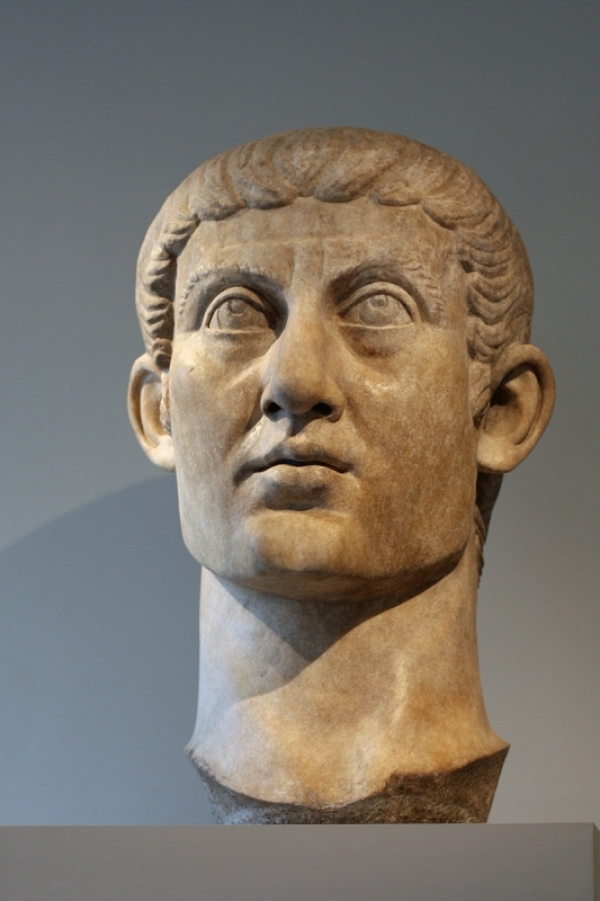
Constantine - 1Constantine the Great: (February 27, 272 – May 22, 337), was also known as Constantine I or Saint Constantine.  He was the 57th Roman Emperor and reigned as Emperor from 306 to 337. Constantine was the son of Flavius Valerius Constantius, a Roman army officer, and his consort Helena. His father became Caesar, the deputy emperor in the west in 293. Constantine was sent to eastern portion of the empire where he succeeded militarily and rose through the ranks to become a military tribune under several. In 305, his father, Constantius was raised to the rank of Augustus, the senior western emperor and Constantine was recalled west to campaign under his father in what is now the British Isles.

He was acclaimed as emperor by the army after his father’s death in 306, Constantine emerged victorious in a series of civil wars against several other emperors to become sole ruler of both the western and eastern empire in 324.

Constantine - 2As emperor, Constantine enacted many political, financial, social, and military reforms that strengthened the empire.

  • The government was restructured and civil and military authority separated which is key separation of powers that has been imitated in many political and governmental systems such as our own American system of government.

    Click here to read the rest of the article »

A Leadership Formula

A Leadership Formula - 2I often wonder what makes a good leader. I think back to some of the leaders I have experienced in my life and try to remember what they had in common. What I remember is, externally they were all different, there was a teacher, there was a coach, there was a boss, and there were a couple of commanding officers. However internally, or spiritually, I think they were very much alike.

I realized much later in life that someone would have to really want to teach or coach, and really love it, because there was no one getting rich from teaching or coaching on the local level. Secondly there was a boss at my first job, he really helped set the work ethic and began laying the ground work for how a leader should treat their team members, and was a great example of how to treat others. Lastly there were some officers in charge while I was in the military. These men taught me about a chain of command, and respect, and how important being a member of a team really was.A Leadership Formula - 3

So what is the formula that makes these people great leaders? I think they all shared some similar spiritual traits, if you will. Consider these:

  • They wanted to lead
  • They had the ability to lead
  • They felt a need to lead
  • They just had to lead

So I would like to discuss each of these things briefly to see the “make up” of a leader.

Click here to read the rest of the article »

The Blindness of Showing Up

jk-simmons-growing-up-fisher

Courtesy NBC Studios. All Rights Reserved.

Recently, I began watching a new Sitcom called Growing Up Fisher. The show is told from the view of a middle school boy whose father happens to be blind. You find yourself rooting for the Father as he struggles to manage a law firm, a recent divorce, two children, and a new seeing eye dog named Elvis. Sounds bleak but it isn’t for many reasons. The show is worth watching. It is rare to find a kind-hearted show on the tube these days.

The show reminded me of a father who attended every one of his son’s Little League baseball games. He never missed one game during that season. Not a big deal eh? What made it unique is that the Father is blind.

Yes. He couldn’t drive to the game or gripe about traffic or complain about parking too far from the field. He was blind! He couldn’t watch his son play. But he was present and in attendance supporting his son every game.

Walter would sit in the stands with his walking stick and watch his son play baseball. (How he got there…I haven’t a clue.) He may have been physically blind but he wasn’t blind to the needs of his child and the importance of showing up.

What blinds you to the needs of your family? What keeps you from showing up?


Things They Never Tell You – Part One

Things they never tell you - 1 - 1“I wish someone would have told me about that!”

How many times have we said that as parents?  I know that I have said it about a bazillion times.  Or, I have said it at least “ten hundred million” times, which was the largest number that I could comprehend as a child.

Human nature assumes that someone out there knows all of the answers.  And if that person would just share that knowledge with us, then we would be able to navigate the difficulties and challenges that life throws our way.  So human nature insists that there is information that is out there, but it is not always shared with us.  That may or may not be true.  I am hoping that some will respond to this with some thoughts on whether or not they believe there is some great cosmic consciousness that contains all that there is to know.  (My personal belief is that the Bible contains all that is necessary to do whatever we need to do in life — including parenting.)

But the thrust of Fatherhood Friday today is that although there are tons of things that we think someone should have told us, we probably would not have believed them if they did.

For instance, I returned from an international business trip last night just before my grandchildren’s bedtime.  I left home last Saturday morning and I returned home late last evening.  I was gone nearly six full days.  I never really travelled on business very much when our children were little.  I was away overnight a few times.  But not many.  And I was surprised by just how much I missed them after only a few days away.  And I was really surprised by how much they seemed to miss me!

Things they never tell you - 1 - 2My point is this.  People told me how much I would miss my family when I was gone.  But, I didn’t really believe them.  I really love my children and yet I did not realize the intense connection that exists in some (not all unfortunately) between a father and their children.  I can remember very clearly my own father travelling when I was young.  And I know how much I missed him when he was gone.  But I never looked at it from his perspective.  

Click here to read the rest of the article »