Missionaries or Mercenaries?

Rocky

Remember when you were young and you could hear a song, or watch a movie (like Rocky) and be extremely motivated?

I was so motivated by Rocky that at the age of nine, I asked for boxing gloves, and proceeded to challenge an older and bigger kid to a boxing match. Needless to say he kept asking if he could stop beating the literal snot out of me, but I thought I was Rocky, and would win in the end. I didn’t. So while motivation can be good, it can also make you get the snot the beat out you.

The other thing I learned is outside motivation doesn’t last. In other words, even if you motivate another individual as a leader, it will only last a short while, and something inside of them has to take over to keep it going, or it’s just a peak in an otherwise very long valley. I learned a long time ago that you might be able to inspire someone for a little while with words, but if they do not have the fire inside of them for whatever it is they are doing, the fire will go out, and you are back to square one.

I also learned this about myself.  

Click here to read the rest of the article »

Leadership Love Languages

Appreciation

We all thrive in an atmosphere of appreciation. Whether that’s peer to peer, parent to child, teacher to student or as we look at here; leader to team.

Steven Covey puts it in his book 7 habits of highly effective people: “Next to physical survival, the greatest need of a human being is psychological survival, to be understood, to be affirmed, to be validated, to be appreciated”.

As we begin 2015; which I imagine will be a difficult year for a lot of organizations. What are you doing as the team leaders to affirm, reaffirm and validate the worth of your team to both the cause and you personally?

I’ve seen a book by Gary Chapman and Paul White called: The 5 languages of Appreciation in the Workplace. In summary it translates the ‘Love Languages’ narrative often used in marriage counseling, into an employment setting; simply stating that if love, appreciation and affirmation, enhances, validates and nurtures marriages then it’ll do the same in a work setting.

After all husbands and wives are humans in a relationship together just as employers and employees. The challenge as leaders, is to work out each of our teams ‘love languages’, seeking to understand how they receive and feel valued and appreciated and implement that through the feedback we give.

Click here to read the rest of the article »

Correction Time

correct this

One of the many fun duties I have in my current position is what is called a “CAR Champion”. The acronym stands for Corrective Action Report or Corrective Action Request, depending on your company. What it basically means, is a process or product did not create the desired or required result and something needs fixed. I’m the person who creates the report with evidence of the failure, the requirement that failed to be met and assigns names to the report that become responsible for actions to be taken. Let’s just say, it is a job duty that can make someone not the most popular person in the building. Even though I may be largely an evidence gatherer and assignment messenger, it’s still my name they see in the email from our system saying (in their interpretation) “you messed up now fix it.”

Any established quality system is going to have a corrective and preventive action program. A corrective action is; taking action on a nonconformity that has already happened. A preventive action is; taking action on something that has the potential of resulting in a nonconformity. It is common in my experience that supervisors and managers are not exactly “thrilled to bits” at receiving communication saying they are responsible for either action, as it is only seen as a failure. The aspect that most of them miss, is that taking decisive ownership of a corrective or preventive action request can result in positive improvements in their departments, provide a multitude of leadership opportunities throughout the process, promote team building moments and development opportunities that can identify other leaders in their company.

I have held this type of position in my last two career stops. It’s a position that requires

Click here to read the rest of the article »

How to Lead an Underachieving Team

Underachiever's Manifesto

There are times in our various leadership roles that we will have times of great productivity, effectiveness and performance. These times are wonderful and full of promise and excitement. But there are other times when it seems like instead of the Midas touch turning everything to gold, our leadership or our team keeps missing the mark. So what do you do when the group, team or organization that you are leading is unproductive, ineffective and non­-performing? In this post I would like to propose ten basic principles / leadership behaviors that will help you in these dry / difficult times and help you and your team discover your full potential.

Examine motivations – Like the old Sprite commercial that asked the question “what’s my motivation”, we too must examine our own motives and those of our team. If motives are selfish or self-serving the team will inevitably fall short of its potential. Motives need to be focused on fulfilling the mission of the organization and seeking to benefit others.

Discover obstacles – Obstacles come in many shapes and forms. Some are obvious some are not. A leader that can help a team to perform needs to be able to identify bad attitudes, cumbersome systems, unnecessary bureaucracy and so much more. Running a race is a lot more fun when you don’t have to hurdle something every few feet.

Inspect tools – Tools are a vital part of performing and producing. When tools are not ­maintained, not up­-to­-date, not accessible or not appropriate to the task the work of the team will be slowed down or thwarted. Make sure your tools are sharp, clean, organized and available.

Click here to read the rest of the article »

Teach Gratitude to a Preschooler in Four Simple Steps

Gratitude

In all things give thanks… The five year old just celebrated her birthday. She received a predictably mountainous and diverse pile of presents from family and friends, and we had a princess party with Rapunzel wigs, manicures, make up, and an assortment of little princess activities. As any parent might, we made a big deal out of her day. Yet as her daddy, I asked myself before the party and after: what lessons are my little girl learning from this showering of attention and gifts, and are those lessons the right ones?

There are obvious lessons: I am special. I am loved. I am blessed. I am liked. My life is appreciated.

There are subtle lessons: Some people brought me nicer gifts than others. Some people seem to be having a better time than others. Some people seem to be sad (or angry) that I am the one receiving all the attention. Some people wish they had my toys.

And there are some lessons that are insidious: I didn’t get as many presents as my older sister got at her birthday. I think the present I got my friend for her birthday party is better than the one she got me. The party I went to last month was much more fun than my party. I don’t have as many friends as some of my other friends do.

You get the idea – all of these are non-specific and all of them apply. I am amazed as a still-rookie Daddy that these lessons are taught and learned at such a tender age. Yet it is my responsibility to lead my family through them: contentment, envy, fairness, jealousy, joy… but our focus for today is gratitude. As you develop a plan for teaching your kids to be grateful, consider these things:

1. You can’t teach what you don’t know.

Before you can teach anything to anyone – and especially your kids – you’re going to need to understand what it is you are teaching them. The word “gratitude” come from the same latin root word from which we derive the word “grace”. Although grace and gratitude don’t share precisely the same meaning, they are two sides to the same coin. Indeed, one could make a strong case that the proper response to grace is gratitude.

So, start like this: make a list of the graces you experience in your own life. Life itself is a good place to start, and while you are at it, think of other people who have led you, and taught you, and corrected you. And maybe even consider how people who have been less than gracious to you have shaped you in ways that have somehow or another worked out well. You can continue from there. Perhaps (and hopefully!) your children themselves are high on this list. Make certain that you consider how the people in your life figure into the grace/gratitude spectrum. This could as easily be called “counting your blessings”, but your list will have greater meaning to you and your kids if you write it down.

Click here to read the rest of the article »

Most Read Article on LeadershipVoices.com

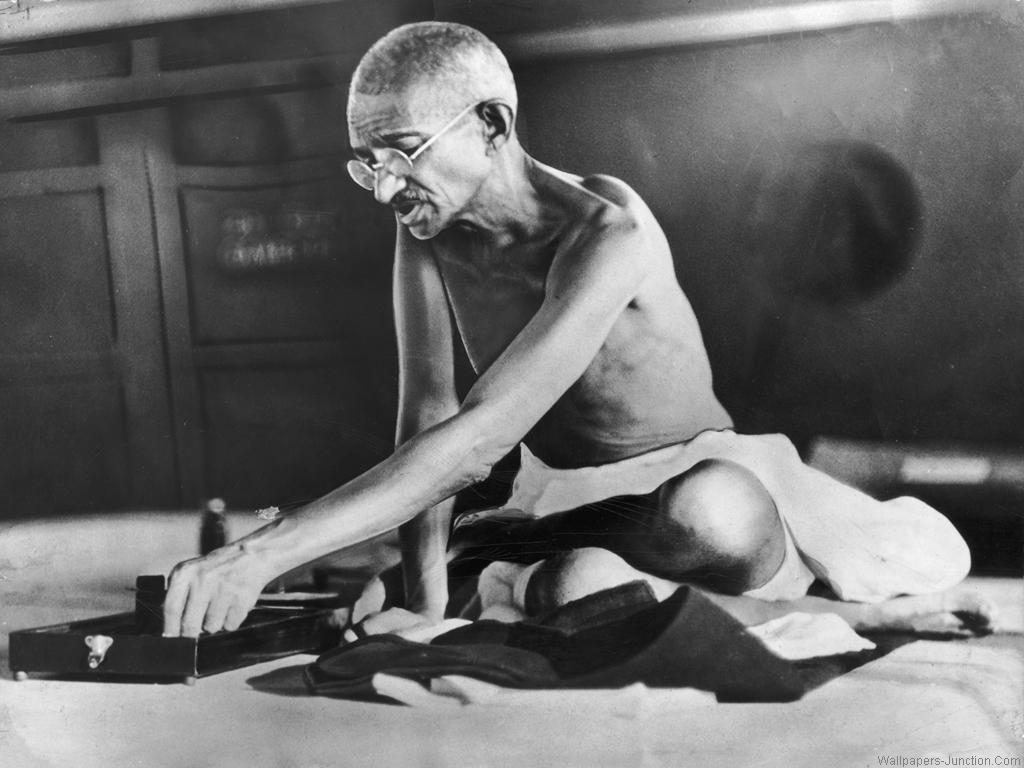
Mohandas Gandhi

Perhaps it is appropriate that this article Mahatma Gandhi – A Quiet Leader, became the single most searched for and read article on LeadershipVoices.com while I have been here in Bangalore, India this week.  As I was reviewing some recent web traffic statistics and analytics I saw that an article that I wrote back in February of 2013 has become the most popular article on the entire site.  So, perhaps now would be a good time for you to read it if you are new to LeadershipVoices in the recent months.  Gandhi appeared in another article one year later and you may want to check it out as well.

Click here to see the first article as it first appeared on February 13, 2013.  And click here to see the second article that appeared on February 12, 2014 where there was a comparison drawn to a couple of quotes.  One from Mahatmas Gandhi and one from former Soviet leader, Boris Yeltsin.

Surrender – A tactical leadership option?

Surrender Kiss

I was recently thinking about what I consider to be the most misunderstood aspect of great leadership; in other words, what makes great leadership great? What immediately came to mind is not only misunderstood, but it also happens to be one of the most often overlooked elements of leadership. And it is one which also affords leaders the greatest opportunity for personal, professional, and enterprise growth. If you want to become a better leader in 2015, I suggest you become comfortable with a leadership practice that very few are – surrender.

Surrender – not for the faint of heart

You’ll rarely encounter the words leadership and surrender used together in complementary fashion. Society has labeled surrender as a sign of leadership weakness, when in fact, it can be among the greatest of leadership strengths. Let me be clear, I’m not encouraging giving in or giving up – I am suggesting you learn the ever so subtle art of letting go.

A leader simply operates at their best when they understand their ability to influence is much better than their ability to control. The purpose is not to shine the spotlight on yourself, but to unlock the potential of others so they can in turn shine the spotlight on countless more. Control is about power – not leadership. Surrender allows a leader to get out of their own way.

“The greatness of a mans power is the measure of his surrender.”

William Booth

Click here to read the rest of the article »

Leading Without a Title

Leading Without a Title

So what can a “leader” do without a title?  What can a “leader” do without a position?

There are many times in life, work and ministry that we may find ourselves without a formal title or position and yet still feel a call to lead. But who will follow? And who are we leading? And for what purpose? And toward what end result?

All of these are questions we may face when we feel a burning desire within to help others, to see lasting change in lives, organizations and communities and yet don’t have an official “platform” from which we can lead.

What are some principles of leadership that are applicable regardless of title or position?

Click here to read the rest of the article »

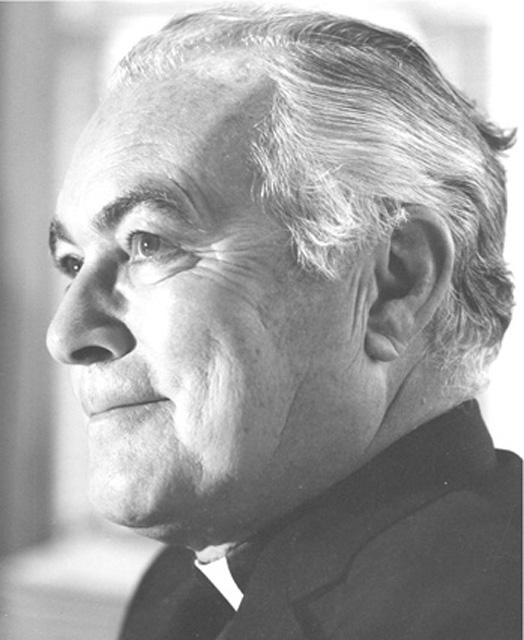
Father HesburghThe very essence of leadership is that you have to have vision. You can’t blow an uncertain trumpet.

Father Theodore M. Hesburgh

Stability and Leadership – Are They Related?

Stability and Leadership

I have recently begun hanging around some entrepreneurs in an effort to learn from these folks about how to build something tangible from just a dream and and some drive.  These guys (and one gal) are inspiring to me.  My hope is that they will help me grow Leadership Voices beyond my own personal abilities.

There are many management philosophies out there and they have many followers that would state that stability in and of itself is actually non-entrepreneurial. Here are some common expressions that may be familiar to you:

  • Always question what you have.
  • Don’t follow the rules.
  • If you don’t take the risk, you will never succeed.

Although I agree with the spirit of all these statements in general, I disagree with the typical or traditional interpretation of their intent. All these actually imply one very important and often overlooked pice of advice. The underlying theme of all these maxims should be that your goal is be to be performing continuous improvements to the process. But, unfortunately, the above statements are usually taken too literally and that is a danger for budding entrepreneurs and leaders.

Let’s consider the impact of those statements on my topic for the day. – Stability.

Click here to read the rest of the article »