Leadership and “Coasting”

Coasting - 1Is it ever OK to just coast along for a while?

That is the question that I am pondering this morning.  You see, I am tired.  I am probably not near as tired as some of you.  But I am still tired.

I am thinking right now of a young man who is probably the hardest working guy that I know.  He is up very early every morning and heads out the door long before the sun is even thinking of rising.  I am thinking of a single mom who is doing a great job with a couple of very “energetic” children.

I can only imagine how tired they must be.

I have just finished a very busy phase of a major project that I am working on.  I have a very busy and hectic schedule for the next few weeks.  And then I will have some down time between projects.  But right now, all I want to do is stop peddling and coast for a while.

Do you ever feel that way?  Is ”coasting” ever an option for leaders?  Is it ever acceptable to just to just put things on autopilot and let things run on their own for a while?  If so, how long is an acceptable time to coast?

Coasting - 2Here are my thoughts.

It is physically impossible to be a hard charger every moment of every day.  As leaders we must have some down time.  Perhaps this is the strongest argument for developing young leaders around us. 

Click here to read the rest of the article »

Thursday Thought: Failing Organizations

Failing Organizations - 1Being involved in the realm of leadership coaching and leadership development, I choose to observe things that many do not take notice of.  And there is a constant that is visible to all those who would look closely.

“Failing organizations are usually overmanaged and underled.”

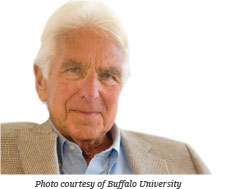
Warren G. Bennis is credited with this quote.  Bennis grew up within a working-class Jewish family in Westwood, New Jersey.  He enlisted in the United States Army in 1943 and would go on to serve as one of the Army’s youngest infantry officers in the European theater of operations.  He served bravely and was awarded the Purple Heart and Bronze Star.  (I like him already!)

He spent much of his career in the academics and in leading great academic institutions.  He authored or co-authored 30 books.  He may have been the one to coin the phrase “ . . .  is like herding cats.”

Failing Organizations - 2One of his most well-known works, On Becoming a Leader, originally published in 1989, lays the foundation that a leader must be authentic.  He uses words that speak of the need to

Click here to read the rest of the article »

Leadership and Self-Control

Self-Control - 1For the past few months I have been kind of “looking inward” at myself. You know having some of those internal discussions with yourself, lying in bed at night, or on your drive to or from the office. I have been thinking a lot about my family, my past and what our future may hold. During one of these discussions with myself, I started thinking about my flaws, yes friends; believe it or not I have flaws. I know that may come as a shock to a few of you that know me, but it is true. The flaw I struggle with the most is self-control.

Now I wanted to discuss this because I think it is the most detrimental flaw for a leader to have because I think there is some “trickle-down effect” to their followers. In this case I refer especially to our families. What I have begun to realize is my lack of self-control has begun to rub off on my wife and kids. So maybe what I have done here is discovered a Leadership series that should be called Leadership Behaviors, hopefully Kevin won’t read this and ask me to do that.

The more I think about this the more interested in discovering a solution so I thought I would go dig around on the old “inner web thing” and see what others thought. What I found is it must be a pretty common problem and here are what I am going to call the “Four Cs” of learning self control, tell me what you think.

Click here to read the rest of the article »

How to Love at Work and Not Feel Totally Awkward

(This is a guest post from Rodney Mills, a leadership coach and speaker and close friend of Leadership Voices. You can read the original post on his blog or find out more about his services by clicking HERE. Sign up for his blog and get his latest eBook – The Personal Mastery Resource Kit – absolutely free!)

You know how a fish looks when you take it out of water? That’s how I look when I’m in the water! No kidding. So what am I doing signing up for a Triathlon?

drowning

That’s what I keep asking myself over and over. I’ve been running and cycling rigorously for a couple of years now, and I’ve even done a couple of duathlons. This triathlon thing has been on my bucket list for a long time, so I thought now is as good a time as ever to get it done.

But I can’t swim. Well, I can swim, it’s just not a very pretty sight. As I’ve been trying to explain my plight to family and friends, hoping for some sympathy, it dawned on me the reason I’m so uncomfortable with this skill.

Swimming is not a natural thing for me to do. I didn’t grow up around pools or lakes. For a few weeks, in the sixth grade, the school loaded us up on busses once a week to take us down to the local YMCA for swimming lessons. Then, one week each summer, I’d go to camp and get about an hour a day in the pool. That’s about it for me. No wonder swimming isn’t natural.

We learn to run fairly quickly. My mom says when I was two, I was so efficient at running, I scaled a ladder leaned up against the house and ran up and down the roof line, evading my dad’s best efforts to rescue me, while my mom nearly died of heart failure. Running is natural for me.

Now, riding a bike? That wasn’t very natural at first. But it didn’t take much time until the training wheels came off. Before long, I joined the other Evil Kenevils of the world, screaming out, “Look Ma! No Hands!” Cycling is very natural to me now.

The reason I’m not comfortable swimming yet is because I haven’t done it enough. I’ve got to work on my breathing and my stroke. I’ve got to be okay with keeping my face down in the water. I’ve got to stop worrying about what everybody thinks of how I look in my Speedo. (Okay. I don’t wear a Speedo. I promise you: I never will!) 

Why am I telling you all this? Hang in there with me a minute and I think you’ll get it.

In my last post, I talked about the Four Pillars of Trust: Integrity, Humility, Gratitude, and Generosity. If you didn’t get a chance to read that, click HERE to go back and check it out. My argument is that trust is the “currency of leadership” (or any relationship for that matter). Trust is the basis of permission-based leadership as opposed to positional leadership which relies on command and control.

In that post, I also promised we would talk about the Foundation of Servant Leadership. It’s a very simple concept – just one word – yet it is profoundly difficult to fully grasp. That foundation is: love.

Since I first started studying servant leadership several years ago, one thing has puzzled me more than any other: What is the motive for servant leading? Other than believing it seems like a noble way to lead, how could it ever be natural? Well, the answer is found in this foundational truth of love.

Click here to read the rest of the article »

Leadership Lessons from 1776

LL from 1776 - 1“Men make history…not the other way around. In periods where there is no leadership, society stands still. Progress occurs when courageous, skillful leaders seize the opportunity to change things for the better.”

—Harry S. Truman, 33rd U.S. President (1945–1953)

Is there a better quote to have for today than this one?

My goal today is to be short and sweet! And I would just leave you today with a few thoughts on this most important secular holiday of the year. Here are those thoughts:

We are living in a chaotic world of rapid and revolutionary change. Unfortunately, much of that change is not positive. Therefore, rising above the current situation and learning to adapt, manage, and lead a positive change process is essential to survival. Wisdom, agility, discernment, and expertise in the area of change leadership are essential to leaders today. All leaders must learn to navigate change, but all of the truly great leaders today are masters of leading change, revolutionary change. Whether international, institutional or organizational change, a mass movement, a world-wide protest, or a nonviolent revolution; learning to lead and organize people and resources around a positive, constructive, creative, and dynamic shared vision of change is indispensable to success.

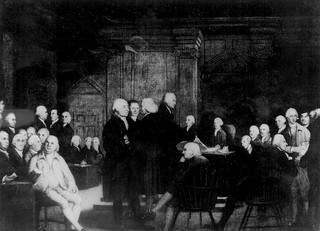
LL from 1776 - 2But we must do so much more than organizing people and resources. These are skills of a manager or an expert in logistics. What this country needs is another generation of Washingtons, Jeffersons, Adams, Franklins, Reveres, Hancocks, and so many other brave men who put ink on a piece of parchment that for many, sealed their doom.

But their leadership and signature did something else.

Click here to read the rest of the article »

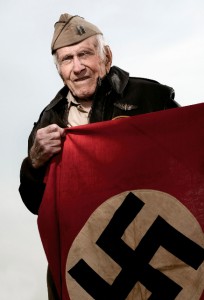
Louis Zamperini

LOUIS_ZAMPERINI_COLOR_1-204x300

Louis Zamperini, Olympian, WWII Veteran, and POW passed away yesterday.

I was very saddened to hear the news.  He became an inspiration to me through his amazing tale of survival and redemption through Christ.  He is my hero.  

I had the amazing honor of spending an entire day with the hero when he came to Houston’s First Baptist to speak about his life.  I was afforded the amazing honor of being his driver and spending precious moments with this incredible man.

Thank you, Louis for being Unbroken.  Thank you Jesus for being Broken for us.

Louis…see ya soon.

IM_LouisZamp_BG_D1

Leaders of the Past – Better than Today?

Better than today - 1Sitting at lunch yesterday with one our most prolific authors on LeadershipVoices.com and with a new author who is going to be providing some interesting content in the coming days, our conversation was about leadership and the leadership crisis in our culture today. One of my hypotheses is that we are just one generation away from losing our society and our culture due to the lack of leadership skills today. One of my lunch companions had a much more optimistic view that we are several generations away. All I know for sure is that there is a distinct lack of leadership exhibited today. And it “seems” that there were better leaders and more leadership skills in the past.

And it seems that leaders of the past almost always seem more effective than those of today. Perhaps it is a perceptual bias: We long for what we don’t have, and mythologize what we used to have. But even taking this bias into consideration, many of today’s leaders don’t seem to measure up to our expectations.

According to a survey conducted by the Harvard Kennedy School several years ago, 68% of Americans believe that there is a “leadership crisis” in the country; and leaders in only four out of thirteen sectors polled inspire above average confidence. Those sectors were the military, the Supreme Court, non-profit organizations, and medical institutions. Leaders of the news media, Congress, and Wall Street receive the lowest scores. Who is surprised by this?

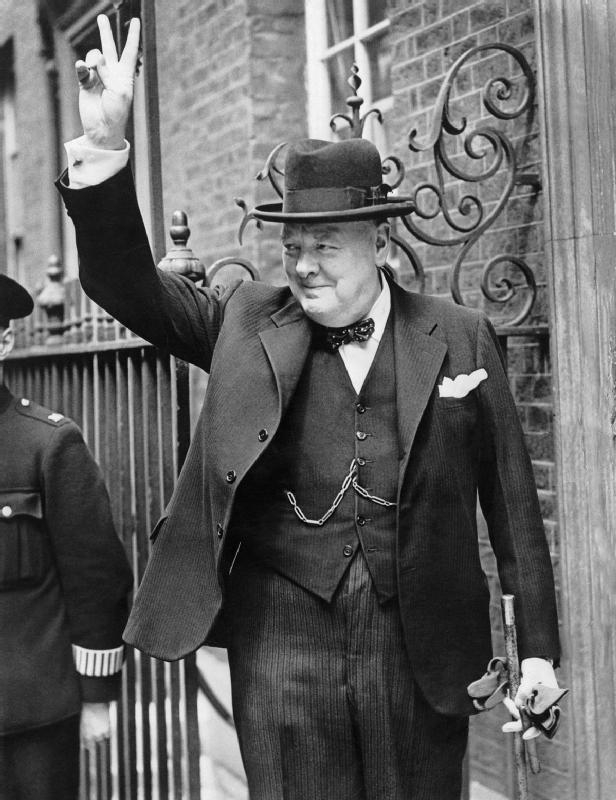
Better than today - 2My parents used to tell me that the leaders of their day not only inspired confidence, but respect and reverence as well. They talked about Roosevelt, Churchill, Eisenhower, Gandhi, and others of that generation as larger than life figures. Growing up, I had the same impressions of John and Robert Kennedy, Martin Luther King, Margaret Thatcher, Ronald Reagan, Mikhail Gorbachev, Lech Walesa, and others. Sure they had their flaws, but they were courageous and decisive, and could communicate in ways that made it clear what they stood for.

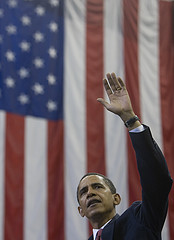
But today’s public figures don’t seem to inspire the same confidence. According to recent Gallup figures, only 29% of Americans think that President Obama is doing a good job; and only 7% have a favorable view of Congress.

The irony is it’s likely that more money has been spent on leadership development in the last two decades — in both the public and private sectors — than was probably spent in the previous ten decades combined (admittedly I’m guessing here; no figures seem to be available). All I know for sure is that my personal leadership consulting practice is up this year over last year and that year was up over the previous year. So why are we not turning out better leaders across the board? Let me suggest two possibilities — and perhaps readers will add others:

Click here to read the rest of the article »

Manday: Speaking to the Ladies

Manday - Speaking to the Ladies - 1Here are some things that I know to be true.

Ladies, if you marry a real man, not a man that is flashy and edgy and is an exciting “bad boy”, but a real man.  If he has demonstrated an ability to make self-sacrifice a part of his basic character and is therefore willing to be a man that will make every sacrifice needed to become the Spiritual leader of your home, I can promise you one thing.  I can promise you that he will have a long term view of love and of life.

And it is that long-term view of love and life that will be the thing that drives his commitment to you and to the family that you and he have established.  Real men have a long-term view of the world.  Many men only think about what is right in front of them.  When you are in front of them, they think about you.  But when they are away from you and your eyes, their eyes have a tendency to wander.  They can be distracted by the short-term and by doing what feels good.

Real men with long-term views are not distracted by what they see and they are not guided by what they feel.  Instead, they are guided by commitment and principles.  The problem is that many times these kinds of men are not the ones that some ladies tend to notice.  I know this for a fact.  And here is how I know.  

Click here to read the rest of the article »

The Importance of Perception

Importance of Perception - 1“It is more important to the rest of the world that your American president appear or be or be perceived to be a leader than for him to actually be a leader.”

This was a statement made by some colleagues at dinner the other night. I have been in Spain for most of this past week on a business trip. And all of my colleagues are not from the United States. One was from New Zealand, one was from Belgium, one was from the U.K., and the folks we were meeting were all from Spain. So, I tried to keep my mouth shut as much as possible lest I create an inter nation incident!

But I am struck by this question: What are the implications of this kind of thinking?

This was a painful thought for me to consider and it has been on my mind since the moment that one of them said it to me.

What does that mean about leadership?  Is that a statement about political leadership in particular? Is any part of that sentiment true?  What about your leadership role?

Click here to read the rest of the article »

The Great Man Theory

Great Man Theory - 1You may have heard people saying, “Great leaders are God-gifted, not man-made”? This quote reflects the results of a very popular (apparently) theory known as Great Man Theory of Leadership, which says that leadership traits are ingrained in a person. In other words, the answer to the question of knowing whether you are a leader or not, is that you were either born as a great leader or not. Factors such as your up-bringing, education, experiences are only modeling your leadership abilities; they aren’t responsible for making you a leader.

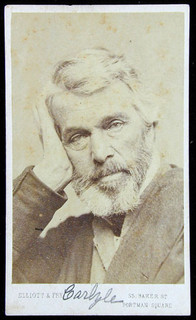
Great Man Theory - 2During the 19th century, the Great Man Theory of Leadership became very popular. The theory was formulated mainly by analyzing the behaviors of mainly military figures of the time. In the 1800s, leadership positions were held solely by men and were typically passed on from father to son. So, it’s not a coincidence that the theory was named “Great Man Theory” as there weren’t any women that were given the opportunity to rise when the occasion presented itself. The famous historian, Thomas Carlyle was deeply involved with this Great Man Theory of Leadership and had even stated that the history of this world was basically the combined biographies of these great men. Mr. Thomas Carlyle believed that effective leaders were a package of Godly motivation and the right personality.

History is the essence of innumerable biographies. 
Thomas Carlyle

Herbert Spencer (1820 – 1903), famous sociologist said that great leaders were only products of the atmosphere and society they worked and lived in. In other words, society was shaping these great men as opposed to them shaping society. The Great Man Theory is so engraved in our souls that we almost instantly connect authoritative figures as having leadership qualities that should be replicated to become successful. What about authoritative figures that are poor leaders?

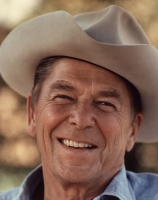
Great Man Theory - 3Think of your favorite President or Prime Minister (Ronald Reagan for me), depending on where you live. Now, think of the leadership attributes that you believe makes (made) him or her worthy of the leadership label. Lastly, make sure you seriously consider this before continuing on. Okay, the big realization: are these traits emanating from his being or are they the fruits of all of the great leaders that are guiding him or her behind the scene and who are never or almost never given the appropriate credit!

We did not necessarily seek the role of leadership that has been thrust upon us. But whether we like it or not, the events of our time demand our participation.
Ronald Reagan

This simple exercise really demonstrates the fact that these “Great Man” believers aren’t alone nor are they the results of their “Godly motivation and personalities”, as stated by Mr. Thomas Carlyle. I’m not saying that they aren’t great leaders, they certainly can be. However, we need to realize that these “great man” weren’t born great leaders; they had the potential of being a great leader just as we do, and their leadership abilities have, like ours, evolved from their education, experiences and personalities combined with the social context in which they lived.

If we desire leadership, can we change our surroundings to help fulfill that desire? Are all the necessary traits for leadership already in us and they just need to be turned on? Can we become great leaders despite our social or economic status?

Photo credit: tastybit / Foter / (CC BY-SA 2.0)
Photo credit: Penn State Special Collections Library / Foter / (CC BY-NC-SA 2.0)
Photo credit: Foter / Public domain
Photo credit: K. Sawyer Photography / Foter / (CC BY-NC 2.0)