Leadership and Appreciative Inquiry – Part 2

AI - Part 2

Earlier in the week I tried to provide a bit of an overview of what Appreciative Inquiry is all about. The most concise definition I can provide is that it is a way of looking at challenges in a more positive manner.

As a reminder, here are the five principles of AI from my earlier article:

  • The Constructionist Principle
  • The Simultaneity Principle
  • The Poetic Principle
  • The Anticipatory Principle
  • The Positive Principle

I invite you back to that article for a synopsis of each of those principles.  Click this link to review that article.

This article is about the process that comes out of the questioning and positive approach to what many would call “problem solving.”

Click here to read the rest of the article »

Leadership and Appreciative Inquiry – Part 1

AI - Part 1

I had a “vigorous” discussion several months ago with someone whose opinion I have always valued. I have not always agreed with it. And in fact, I did not agree with it in the context of that vigorous discussion. However, I had reflected upon something that he said to me and have decided to put make of those thoughts available to Leadership Voices.

He challenged me to consider the Appreciative Inquiry (AI) Model rather than the model of problem solving that I tend to employ. I was not as versed in AI as he. And you may not be as well. If so, consider this quick definition of AI.

Appreciative inquiry (AI) is a model for analysis, decision-making and the creation of strategic change, particularly within companies and other organizations. It was developed at Case Western Reserve University’s department of organizational behavior, starting with a 1987 article by David Cooperrider and Suresh Srivastva. They felt that the overuse of “problem solving” as a model often held back analysis and understanding, focusing on problems and limiting discussion of new organizational models.

The model is based on the assumption that the questions we ask will tend to focus our attention in a particular direction. The more common methods of assessing and evaluating a situation and then proposing solutions are based on what AI terms a “deficiency model.” Some of these more common methods ask questions such as “What are the problems?”, “What’s wrong?” or “What is broken and needs to be fixed?”.

Appreciative Inquiry has 5 Principles:

Click here to read the rest of the article »

Five Fundamentals for Young Leaders

5 Fundamentals for Young Leaders

It is graduation season. In fact, I attended a graduation celebration today for some very impressive young women who are graduating from high school.  And it is Summer Intern season where I work. So, youth and optimism are in the air.

I thought I might take this opportunity to offer up some advice for those making the transition from high school to college, college to career, and ultimately, child to adult.

As a young professional just starting out, you may think you can’t lead because of your youth or short tenure within your new company. I am going to invite you to reconsider that thought.

In fact, youth and short tenure can be assets. Young professionals may not bring years of experience to a company, but they bring optimism, enthusiasm, energy, exuberance, a set of new ideas, and experience with new technologies that others in the company may not have. They also bring a fresh perspective — a new look at old problems.

As a young professional, you can still be a leader even though you may not have yet achieved a position of power. In fact, if you exercise your leadership skills as a young professional, your road to a more desirable position can be much shorter.

Consider if you will these five fundamental things you can do to cultivate and exercise your leadership skills without having positional power:

Click here to read the rest of the article »

Anger and Emotional Intelligence

Anger and EI

Can you be considered “Emotionally Intelligent” and still get angry? I had to consider that possibility following a conversation with a really dear friend yesterday. Up to that point my knee-jerk answer would have been “No.”

Now, I am not so sure about that.  In fact, I think you can be emotionally intelligent and still get angry.  Consider for a few moments the nature of “anger.”

Anger is a truly powerful emotion. It can be used either in productive ways or it can be used counter-productive ways. It is sort of like electricity. It can light, heat, or cool our homes. It can also electrocute you. In and of itself it is neither positive nor negative. It just is.

Here are few more things to consider about anger:

  • Anger is a powerful survival tool
  • Anger is a response to a stimulus (physical or psychological)
  • Anger is a source of energy
  • Anger is a secondary or a response emotion

Click here to read the rest of the article »

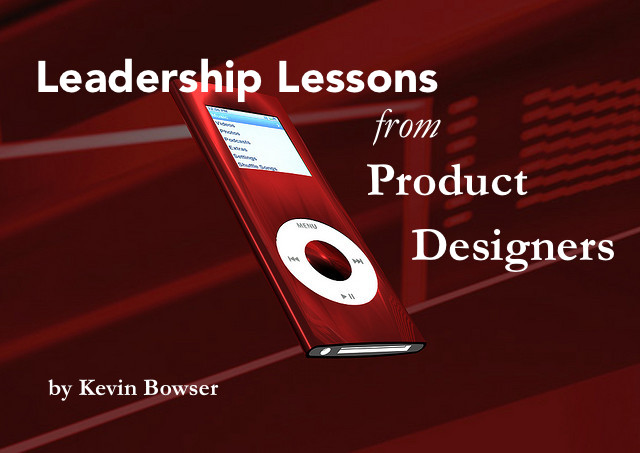
Leadership Lessons from Product Designers

Product Designers

Jony Ive, is a Senior Vice President of Design at Apple.  He outlined his three key tips for designers during a talk at London’s Design Museum. These three practices – although crafted in product design and development language – are spot on for leaders intent on bringing new life to plateaued or declining organizations.

Jony Ive’s 3 Leadership Lessons

In his talk Ive offered up three key practices for high-tech product designers. In order to excel, these innovative product designers must:

  • Learn how to care
  • Learn how to focus
  • Be prepared to screw up and throw things away

Many times product designers work in start-up or entrepreneurial ventures. Cash is not yet king and errors are costly. Too many errors in these early stages will bankrupt a fledgling company and prevent us from ever experiencing their remarkable products.

Those product designers who work in established and mature organizations often experience a cut throat world where the product designer that hits on a winning design is potentially rich beyond his wildest dreams. But the carefree days and camaraderie of the start-up are long gone.

What is the Leadership Lesson in these three practices?

Click here to read the rest of the article »

Insurmountable Circumstances – Part 2

Insurmountable - Part 2

In the first part of this series on Insurmountable Circumstances, I talked about the all-important aspects of preparing yourself, your mindset, your character, etc. After you have begun this process (since we never are fully “ready”) then you must take the time to gather the right personnel and equipment.

Aside from the inner drive to actually take on the imposing mountain in front of you, perhaps the next most important thing that is needed to climb and summit a mountain is the proper gear. Having the right supplies can make the difference between life and death, achieving or failing. You and I know that having the right equipment is important, however sometimes what makes the mountain in front of you seem insurmountable is because you know you just don’t have the stuff needed to get to the top. So how do you gather what is needed?

The truth is that no one of us has all the supplies needed in our back pocket. We must go to the appropriate stores, spend some money, take some time and procure the needed items. Similarly in the workplace and in our leadership efforts,

Click here to read the rest of the article »

Vision provides the “What” – Leadership provides the “How”

The How and The What

My personal journey toward understanding leadership began many years ago. It began in a medium-sized church in Marietta, Georgia in 1983.

Prior to that point I had been an observer. And I had observed some incredible leaders. I would put my own father in that category. His leadership in many areas are an inspiration to me to this very day. But I have observed many different leaders in these past 32 years. I learned as much as I could from men like Bill Searcy, an entrepreneur and small business owner in the Atlanta metropolitan area. He owned a Firestone auto repair shop. I owned a piece of junk Chevy Celebrity that went through 4 sets of brakes in 2 and a half years. It was a “lemon” and I didn’t realize it. We were destined to spend time together. He taught me more about leadership than just about any one else early in my leadership journey. I owe him a great debt of gratitude.

That kind of observation over the years has shown to me that there are two distinct skill sets that are identifiable among those who would consider themselves to be leaders. There are those that “see” what needs to happen. And there are those who “make” it happen. My observation is that it is actually “vision” that provides the “what” or the goal and objective. But it is “leadership” that provides the “how” and the plan to execute the vision that has been laid out.

Let’s consider for a moment those two skill sets:

Click here to read the rest of the article »

Insurmountable Circumstances – Part 1

Rocky Mountains (1)

I am in the Rocky Mountains this week. As I gaze up at the beautiful snow-capped mountains I am also struck by the fact that the peaks are rugged, sheer, and without the appropriate means: insurmountable.

So what do you do when you come up against something that is insurmountable? As a leader what approach do you take when a goal seems impossible to achieve or an obstacle seems impossible to overcome?

I would like to offer a few practical insights to guide you when (not if!) you come up against a sheer and seemingly impassable “mountain”. I will deal with this in two blog posts and will address two things to help you ascend and conquer those mountains. The two primary things that will help you overcome will be 1. Preparing yourself and 2. Gathering the right team and the proper equipment.

So for this post let’s talk about the reality that to overcome insurmountable circumstances you must prepare yourself. 

Click here to read the rest of the article »

Put Your Oxygen Mask On First

Put Your Mask On First

You may have heard these words before and not given them much thought.  Today, you have an opportunity to think about them from a fresh perspective.

If you are traveling with children, or are seated next to someone who needs assistance, place the mask on yourself first, then offer assistance. Continue using the mask until advised by a uniformed crew member to remove it.

This is part of the safety briefing that I have heard way too many times in recent days. Upon a quick review of my flight activity on United’s website I was a little surprised to realize that I have flown almost 92,000 miles on United or another Star Alliance carrier since the beginning of the year. And I have flown another 15,000 miles on other carriers in that time.

You hear basically the same safety briefing on every flight. They are fairly dry and emotionless. Unlike some of the funny stuff you hear coming out of Southwest Airlines, United doesn’t see a lot of benefit in humor.

The part about the oxygen mask caused me to pause and ponder a bit recently. The flight attendant asks you to place your mask over your face FIRST. You are asked to do that BEFORE you offer assistance to your children or anyone else who may need your help. I am not sure about you, but that is a concept that would be hard and seem at odds with the heart of a loving father if my children or grandchildren were onboard with me.

What is the Leadership Lesson?

The leadership lesson is that we must realize it is important as leaders that we focus on ourselves from time to time in order that we will have sufficient energy and resources to lead and be a force for change and growth in those around us.

How do we do that?

Here are 5 things that you can do to put your oxygen mask on first:

Click here to read the rest of the article »