A Leader’s Role in Their Team’s Performance

A Leader's Role in Their Team's Success - 1It may be obvious to most people that a leader’s performance is directly proportionate to their teams success or lack thereof. But it occurs to me that there are teams that have succeeded in spite of their leader and surely there are teams that have failed even with quality leadership. So I set out to discover if there are any connections or similarities that we could find, to determine just how much of a team’s success or failure is because of the leader.


It occurs to me that a leaders specific role may change slightly depending on the team or the goal of the team, but surely there are things a leader does or doesn’t do that helps or hurts a team. These are some of the things I found:

Aggressor: I think this happens when a team leader is directly compensated for his team’s performance. He or she has the ability to block the introduction of new ideas and concepts by minimizing and deflating the status of other team members and creating a sense of intimidation. If this behavior and role is not checked it will tend to decrease the team’s overall motivation and subsequent member involvement.

Click here to read the rest of the article »

Kindness as a Tool

176418000-new-york-city-police-officer-stands-in-times-square-on.jpg.CROP.promo-mediumlarge

I was recently invited to speak at my sons’ school about one of the gifts of the Spirit-Kindness.

At first, I laughed when the President of the school asked that I come and provide some insight into my job as a Police Officer and how I use kindness in my work. (Do you know who I am?  You’ve heard my sharp tongue and lack of tact.  Are you sure?) His thought was that I would use kindness as a fruit of the Spirit in my profession.  In reality, I use kindness as a tool to control ‘tools’.  It is something that doesn’t naturally flow from me.  Believe me…ask anybody who has spent ten minutes with me.  I am mean and can be a tough pill to swallow.

In a recent article, Slate.com attempted to explain why Police Officers can be so arrogant and, candidly, insufferable jerks. We think differently because we deal with folks that can’t manage their surroundings and we have to intervene. We have zero tolerance for stupidity. In those moments, kindness is not going to be the first tool we are going pull from our belt.

It is God’s virtuous gift to be able to respond to the special needs of others who are hurting or in need.  In a world full of anger, selfishness, and contention, the Lord wants us to cultivate the fruit of kindness in our lives.  Let the Lord use you to show kindness to others.  –The Resurgence

As leaders, I believe we need to exercise kindness when dealing with others.  It can help us achieve more than busting someone’s chops.  Believe me I have my moments.  I recently told a mother who left her six-month old daughter and three-year son in a car alone while she went shopping that that she was being ignorant and stupid.  This was after she told me un-repentantly that she knew it was wrong to leave her children locked in a car unattended.

The best example of kindness I can think of was my recent Sergeant.  This man refers to ‘tools’, gang members, teenagers as sir and ma’am.  His tactic to be always respectful of everyone, colors, and personal space allows him to understand the intricate Gang lifestyle in Houston.  With his kindness, he was able to build a huge gang database for Police Officers to better understand the factions on the street.  And ultimately, he may have save some officers lives.  His contagious spirit emboldens other officers to be kinder and more respectful of the civilian population.  His leadership is infectious to those under his supervision.  It challenged us to slow our roll and try a different approach.  He uses the tool of kindness with a deftness that comes from years of experience on the street.  In other words, why fight when you can settle things with words.

During my talk to the students, I shared a simple story of how one aggressive officer was rude and inconsiderate to a woman who had witnessed a car chase come to an abrupt end.  What we didn’t know was that the woman just wanted to know if the person in the car was uninjured.  I only learned this because in moment of kindness I pursued her and asked her how I could help her despite my aggressive counterpart.  After a few choice words directed toward me and the aggressive officer, she stated she was told her son was involved in the car chase and all she wanted to know is if he was alive and uninjured.  I was able to share with her good news and I apologized to her for not being considerate of her needs.

It was at this moment, I was reminded that-It is God’s virtuous gift to be able to respond to the special needs of others who are hurting or in need.

As leaders, God may be wanting us to join Him in responding to special needs to those that are hurting.

Financial Leadership at Home – Part 4 – Giving

Woman Balancing Her CheckbookAs I continue to discuss the importance of providing financial leadership in the home, I want to point out that I am not approaching this as exclusively, or even primarily, the husband’s or father’s role. In some cases, the role of administering the family’s finances falls to the husband and in others to the wife. Some couples choose to perform the tasks jointly or interchangeably. In still others, one handles the bill paying and bookkeeping chores while the other makes more strategic decisions. This structure is often based on skills, interests, or availability, and I don’t believe that any one is necessarily better or more effective than the others. That said, both spouses must ultimately be in agreement on the choices that are made…especially in regards to the family budget (please see my earlier post regarding the importance of a Budget).

An important area where there must be thought and agreement is in Giving. Will any of the family’s income or other financial resources be used to meet the needs of others, outside of the family? It may be as straightforward as traditional tithing to one’s church or as spur of the moment as helping buy groceries for the person ahead of you in line at the supermarket who is short of cash to cover what they have in their cart. It might be contributing to the United Way at the office or directly to charities such as the Red Cross for earthquake or hurricane relief. Giving is a very personal thing. What seems a very worthy or important cause to one may seem silly or naïve to another. But the point is to share one’s resources with others in need.

Financial Leadership at Home - 4 -1

Assuming a family decides that it does have an obligation or at least a desire to help provide for others, the giving must obviously be built in to the family’s budget. As we discussed in a previous post, this does two things.

Click here to read the rest of the article »

Wit & Wisdom – Gandhi and Yeltsin

W&W - Gandhi and Yeltsin - 1I have always been fascinated by Ghandi.  In fact, one of the most popular articles published on LeadershipVoices is an article about Gandhi and his leadership style.  And today I came across this quote.

“I suppose leadership at one time meant muscles; but today it means getting along with people.”
Mohatma Gandhi

I have been doing a lot of research lately on the subject of Emotional Intelligence.  One of the factors in determining your level (identified as your “EQ”) is to measure the way that you get along with others.  The practitioners in this field of study generally recognize 4 areas with one of them being Relationship Management.  This area of study is rich with insights into the way we view ourselves and the way we view others.  And more importantly, how we relate to others.

Gandhi lived long before this area of study came about.  But I would submit to you that Gandhi must have had a very high EQ.  His leadership style and his personal and public life proclaims his understanding that leadership involves using our relationships and influence more than our physical presence as an advantage.

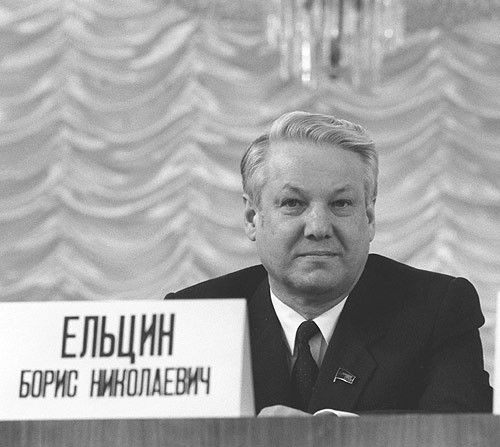
W&W - Gandhi and Yeltsin - 2Boris Yeltsin may have been expressing much the same understanding when he once said:

Click here to read the rest of the article »

Skill Sets for the “Youngers”

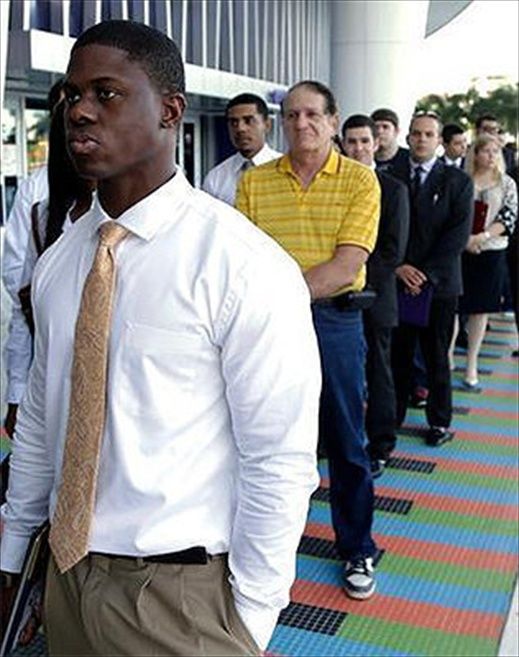
Mentoring Moment for 20140210 - 1In a previous Mentoring Moment, I suggested that Mentors and Leaders need to help make sure our young people have the right skill sets to be attractive new hires. I let open exactly what those skill sets might be. Well, a friend recently sent me a newsletter that makes it clear what our employers are looking for in their new hires. Here are the top ten qualities employers feel will help them gain a competitive edge with the right employees.

Washington – With the economy and job market continuing to slowly improve, more employers are shifting their focus from survival mode to gaining a competitive advantage.

Mentoring Moment for 20140210 - 2“Employers want workers who can help them capitalize on the improved economy and benefit from opportunities presented by less competitively skilled and structured companies. They are looking for workers with skills to help them to quickly grow their businesses, cut their costs and improve their operations,” said Dr. David Miles.

“The lower unemployment rate and improved economy represent good and bad news for job-seekers. While there are generally more jobs available, there is even more competition for them. This is putting added pressure on employees to possess ‘must-have’ skills,” added Miles.

Click here to read the rest of the article »

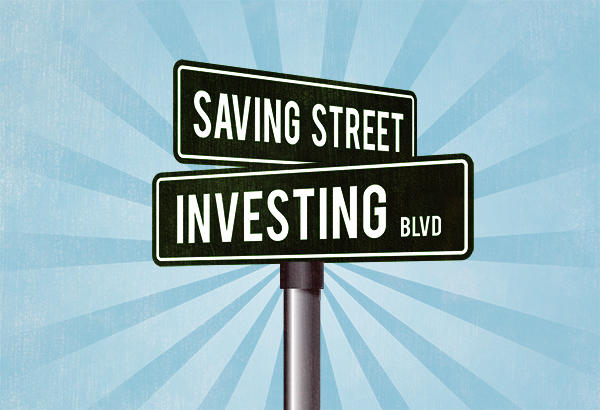
Financial Leadership at Home – Part 3 – Saving and Investing

Financial Leadership at Home - 3 - 1As we continue to look at a leader’s responsibility to take a proactive and intentional approach to managing their family’s finances, I want to state that I do not intend in this series to focus on the critical importance of eliminating financial debt. The crushing impact of adding the cost of servicing debt (i.e., interest) to the family budget has been well documented by many authors, counselors and commentators…most notably, Dave Ramsey. And actively and aggressively working to reduce and eliminate debt will have an even larger impact on the monthly budget in the short term. But it must be done. My assumption in this series of articles is that any necessary debt elimination is built into the family’s budget.

Another critical category of the family budget is Saving and Investing. When it comes to budgeting, most of a family’s monthly expenses are known and somewhat predictable. The rent or house payment are constant each month. Purchases of food and clothing can be controlled in most cases to remain within a preset spending limit. Although the electric bill can fluctuate greatly during different times of year, prior year usage can be a good predictor of what to expect in the future, so it also is predictable. However, car repairs, medical expenses for illness or injury, or a water heater that goes out (as mine recently did) are much harder to accurately predict. So the first type of Savings that must be built into the household budget is for emergencies and unpredicted expenses. Call it, as Dave Ramsey does, an emergency fund, or just call it good old boy scout advice to “be prepared”. Regardless, if you’re buying things you want but don’t need and not saving for unforeseen expenses, you are not managing your resources well.

Financial Leadership at Home - 3 - 3The second type of saving is

Click here to read the rest of the article »

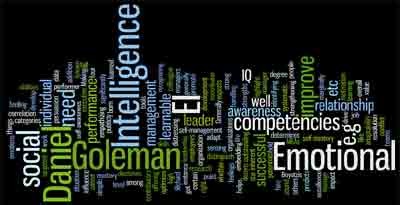
Emotional Intelligence 2.0

Emotional Intelligence 2.0 - 1I have not always been a “reader”. Most of my reading over the years has been to my children and grandchildren.  It is only in the last several years that I acquired the taste for books. And my tastes in reading material vary widely. But recently, I had a book suggested to me by fellow leadership coach, Rodney Mills of Centrifuge Leadership. He recommended the book Emotional Intelligence 2.0 by Travis Bradberry and Jean Greaves. I am using this book currently with one of my leadership coaching clients and I think it is worthy of sharing with the broader Leadership Voices audience.

The book has a foreword by Patrick Lencioni. Many of you will recognize him as the author of Five Dysfunctions of a Team and Death by Meeting. If you are into great titles, those are a couple of great ones. As Lencioni proclaims in the foreword, he’s no expert in this field, but he sees everyday how critical a skill it is to have and he’s so enthusiastic about this book because it’s the first he’s read that actually shows you how to increase your EQ and apply it in your personal and professional life.

The opening chapter deals with Emotional Intelligence (EI) and your Emotional Quotient (EQ) and compares and contrasts it to the more well-known “IQ”. The chapter describes what EQ is and what it isn’t. For example, a lot of people mistakenly think that EQ is a part of your personality. To the contrary EQ is separate from your personality, just as it is separate from your intellect, or IQ. It begins to build your understanding of emotions by showing what the five core emotions look like in varying degrees of intensity. Next the team of Bradberry and Greaves explain research studies that illustrate how important EQ is in daily living. They show how your EQ impacts things like your tolerance for change, how you manage stress, and even how much money you make.

What Emotional Intelligence Looks Like: Understanding the Four Skills

Emotional Intelligence 2.0 - 3The book introduces and explains Daniel Goleman’s four EQ skills: Self-Awareness, Self-Management, Social Awareness, and Relationship Management. Beyond a conceptual description of the skills, the book provides detailed vignettes show examples of real people who are high or low in each of the skills.

To truly improve your ability in the four emotional intelligence skills, you need to better understand each skill and what it looks like in action.

Click here to read the rest of the article »

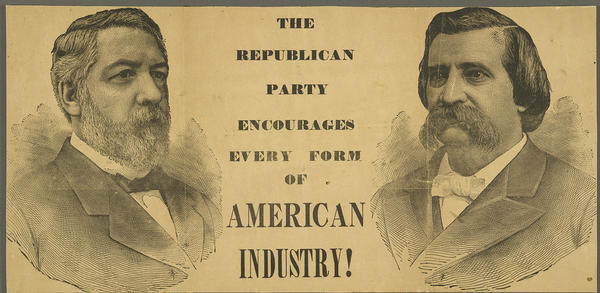
Repairing the Damage of a Past Leader

Repairing the Damage of a Past Leader - 1In my circle of friends and peers, there is a lot of discussion about who the Republican Party will get to challenge for President in the next election. The conversation is almost always who is strong enough and conservative enough to try and undo all of the damage that has been done. I don’t claim to know enough about politics to have a good argument, so I want to bring this a little closer to home.

Repairing the Damage of a Past Leader - 2Some of you know and some of you don’t know, that I am a senior part of a competitive BBQ cook off team, and we are in the midst of our busiest season. We are coming off a fall and winter of several small cook offs and preparing for our biggest of the year. The Houston Livestock Show and Rodeo BBQ Cook-off is a big deal for us. I have been a large part of this Team since my father died in 1999. Being a salesman, I have used it as employee appreciation and a customer appreciation opportunity on more than one occasion. This year the leadership of this team has begun to take it a little more serious than I think they should.

The two guys that are really “in charge” of this team, are not strong leaders, and are causing some strife among the, what I will call part time members of our team. The budget has gotten tight as we have lost a sponsor for Thursday night, and instead of closing ranks, shrinking expenses and “chiving on” the stress has run some friends off. The leaders are saying, “no free entry for friends”, “only a couple of spare entries per member” and we are raising prices. So as I deal with some folk who are saying, “This isn’t fun anymore” it occurs to me that this must have happened in the Leadership arena before.

Repairing the Damage of a Past Leader - 3So I ask you, how does a new leader repair the damage caused by a past leader? How do you go about undoing something that was done, maybe incorrectly, by a previous leader, without causing them any embarrassment? Especially when there is a chance, the former leader is still involved? Surely there has been a new CEO take over only to have his predecessor become a board member or consultant.

I have exercised my leadership to the extent I can, but I don’t own the large pit we use, and the spaces are not in my name. Other than ask for forgiveness not permission, I am struggling to maintain the fun, which is why people come hang out with us. I am afraid if I just put my head down and try to solve the problems as they arise, I will end up by myself. Do I assert myself, and take a chance on hurting my relationship with these guys that were my father’s best friends? Do I get some of the other members together and form a mutiny? Or a hostile takeover? Surely there is a way to obtain new leadership without causing an implosion.

I am looking for your thoughts and feedback on this leadership question.  Let’s use the collective wisdom of the 1,000 folks who are reading what we are publishing.  Be courageous and leave a comment.

Photo credit: Cornell University Library / Foter
Photo credit: Dave Schumaker / Foter / CC BY-NC-ND
Photo credit: THE Holy Hand Grenade! / Foter / CC BY-ND
Photo credit: Dave Schumaker / Foter / CC BY-NC-ND

The School Assignment: What makes me…ME!

945277_10201149528564114_1086785408_n

I still have the privilege of helping my boys with their homework assignments.  I get the privilege of peeking under the hood peek at the heart and discover what men God is allowing them to become.  The school assignment this week in Communication was a speech about themselves.  My oldest decided to mix his unapologetic humor to a interesting perspective about himself that would make any parent proud.  I thought I would share it with you.

I was born in 1997 at midnight to my mother’s discomfort.  When I first came out I was unable to breath because my cord was wrapped around my neck.  Well life for me started as a fight.  At an early age I was a barbaric gentleman.  My dad and my grandfather were always hard on me to be respectful, polite, and to do things to the full glory of God given my abilities.  My dad taught me to fear God and him. 

My brother and I were home schooled for the majority of grade school by my loving mother who taught me the meaning of respect through the belt.  Unlike my brother I went to public school my first few years of school.  All my friends were Hispanic and Black: I found them easier to get along with than the white kids.  At home, my brother and I would play outside for hours; we never wore shirts or shoes we believed that was for wimps.  To this day I still have very little feeling in the bottom of my feet due to the hot concrete on my feet.  When I was five I received a puppy, it was my responsibility to take care of her; that was the first time I ever had to care for someone other than myself. 

Playing outside I broke my arm doing a wheelie on my bike I was very little and my brother locked me out of the house.  Pain grew me that day, because of that first break I’ve never cried again when I broke other bones in my body.  Also I came to love the Simpsons, Sponge Bob, Dragon Ball Z, and Ed, Edd, and Eddy since all I did was watch T.V.  My father with the combinations of those shows gave me a great sense of humor.  My father also knew I wanted to be a soldier so he put me in MMA and Scouts around age 12.  I got in trouble in Scouts one day for getting in a fight with a little punk.  My dad told me one of the important things I remember “Don’t start fights just to make sure you finish them” .  That along with the punishment from my MMA Instructor taught me to control myself.  Later the same kid and his friend would ambush my brother and me when I had my broken wrist.  My little brother who was 9 at the time protected me from three different kids.  This is first time I began to appreciate my brother. We finished that fight.

My brother and I are still in Scouts today.  Boy Scouts has taught me time management, communications skills, and how to survive.  It has molded me into a leader.  I’ve missed Homecoming Events every year for Scouts.  I’ve missed many fun events with my friends from school because I was climbing mountains, riding horses, licking something by the side of road, jumping off dams, canoeing up stream, fishing, burning other Scout’s things, doing back flips off mountains, running from bears, eating wild hog, shooting shotguns, falling in mud, hiking 125 miles uphill then hiking another 100 downhill just to say I did it.  And to this day I will never regret this ever.  That’s what makes me. Me!


Financial Leadership at Home – Part 2 – A Budget

Financial Leadership at Home - 2 - 1In my recent post about Financial Leadership, I stated that many leaders find their financial responsibilities at home continually failing to reach the top of their priority list. Other things seem more urgent, more interesting, or just easier. However, finances are an area that a leader in the home simply cannot ignore.

The foundation of financial responsibility, whether in an organization or in a home, is a Budget. Much like other areas of leadership, creating a budget is a proactive, forward looking activity. Simply reacting to financial needs and decisions as they come rather than planning and providing vision is, by definition, not leadership. Most financial obligations are predictable, and even financial surprises can be anticipated and prepared for.

There are many methods and tools for budgeting. With each, the objective is to decide, in advance, how the family’s money will be spent. Beyond the basic food, shelter, and clothing, it also requires determining what is (or what should be) important to the family, and often times prioritizing those discretionary items. My goal here is not to provide a “how to” lesson or to give financial advice, but rather to encourage you who strive to be leaders to take this basic step if you haven’t already. Having a carefully prepared budget provides the justification to say “no” to discretionary spending that cannot be supported by the current income, and it also makes it easier to say “yes” when the family wants something that is within its means and consistent with its values.

Click here to read the rest of the article »